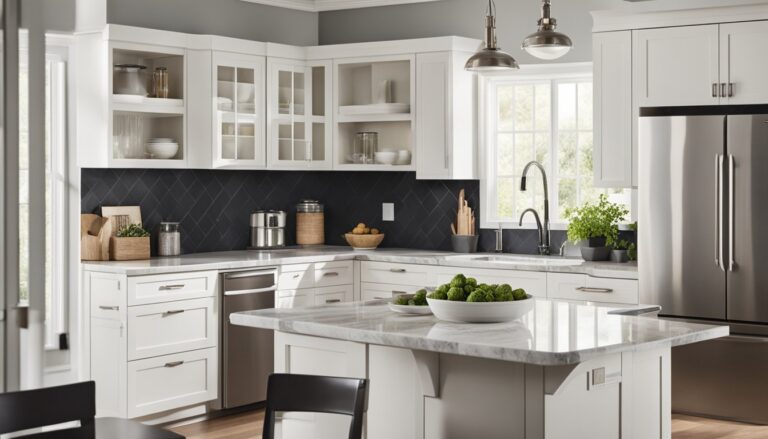


The Comprehensive Guide to the Best Ready-To-Assemble Kitchen Cabinet Options for Modern Homes in Canada
Embarking on a complete culinary space transformation represents a significant milestone in homeownership across Canada. The cabinetry you select serves as the foundational element of the room, dictating both the functional workflow and the overall aesthetic appeal of your environment. Historically, homeowners faced a difficult choice between incredibly expensive bespoke woodwork and low-quality, mass-produced units that deteriorated rapidly. Today, the landscape of interior design has dramatically shifted with the introduction of premium ready-to-assemble solutions.
These sophisticated modular systems have revolutionized the residential remodeling industry. They democratize access to high-end materials, expert craftsmanship, and timeless design without the prohibitive costs traditionally associated with custom millwork or local cabinet makers. Finding the perfect kitchen cabinet can completely redefine your cooking space, allowing for seamless integration of modern cabinet services.
Navigating the multitude of available options requires a deep understanding of construction methods, material science, and spatial planning. A successful kitchen renovation project hinges on meticulous preparation and an informed approach to selecting components that align with your lifestyle demands. Whether you consult with professional kitchen designers or plan it yourself, aiming for a sleek, minimalist aesthetic or a warm, traditional atmosphere is highly achievable. Modern modular cabinetry provides the exact versatility required to achieve your vision. This extensive guide explores every critical facet of selecting, planning, purchasing, and installing these advanced systems. We ensure your investment in a new kitchen cabinet yields a beautiful, highly functional space that stands the test of time.
1. The Evolution and Definition of Ready-To-Assemble Cabinetry
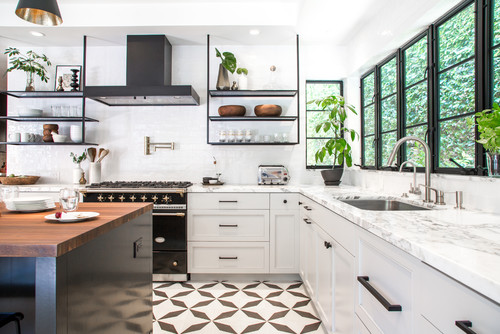 Photo by Cinergy Construction – Transitional white shaker kitchen cabinet with a classic aesthetic.
To fully appreciate the value of modern modular systems, one must understand their evolution. Decades ago, flat-packed furniture carried a stigma of inferior quality. They were often associated with flimsy particleboard and unreliable plastic fasteners. However, advanced manufacturing technologies and globalized supply chains have entirely transformed this category. Finding a high-quality kitchen cabinet is now easier than ever.
Today, ready-to-assemble units are engineered with precision using computer numerical control machinery. This technology ensures measurements are accurate to the fraction of a millimeter. Every kitchen cabinet produced meets rigorous industry standards for strength and durability.
These systems are manufactured in large-scale facilities where individual components are cut, drilled, finished, and packaged flat in sturdy cardboard boxes. By shipping the components unassembled, manufacturers drastically reduce packaging volume and transportation logistics. This passes massive savings directly to the consumer, offering a Low price kitchen cabinet without sacrificing structural integrity.
Upon arrival, the components feature pre-drilled holes, integrated locking mechanisms, and premium hardware. This allows for a streamlined building process for each kitchen cabinet that rivals the structural integrity of factory-built alternatives.
1.1. The Shift Toward Premium Materials
The most significant advancement in this sector is the transition toward premium raw materials. Contemporary high-quality lines completely abandon cheap fillers in favor of robust, durable woods. Homeowners in Canada can now easily source flat-packed units featuring solid hardwood face frames and cabinet grade plywood boxes. Modern manufacturing also includes sophisticated multi-step factory finishes. This commitment to quality ensures that the final assembled kitchen cabinet is virtually indistinguishable from traditional custom-built alternatives. It provides exceptional longevity and daily resilience for your home.
2. What Are the Core Advantages of Choosing Modular Solutions in 2026?
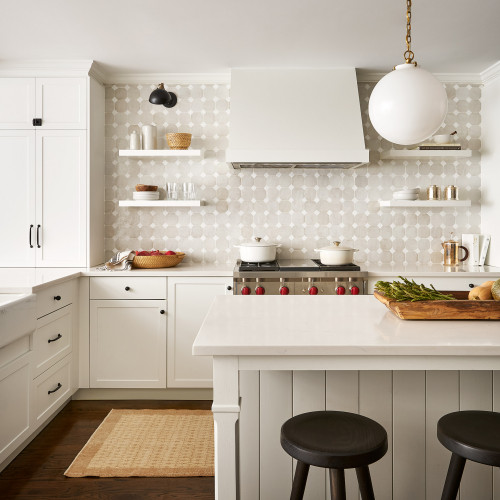 Photo by AZL interiors – Farmhouse-style kitchen cabinet with a rustic feel.
“In 2026, modular kitchen solutions offer homeowners up to 40% cost savings compared to traditional custom millwork. Additionally, modern distribution networks have reduced average lead times from 12 weeks down to just 1-3 weeks, delivering unmatched project efficiency, robust material strength, and immediate availability.”
Selecting unassembled units for your home improvement project unlocks numerous strategic and financial benefits that have only grown stronger with recent industry advancements. Understanding these advantages allows you to allocate your remodeling budget more effectively. You can potentially free up capital for luxury appliances, premium stone countertops, or advanced lighting systems. Building a Flat pack kitchen cabinet requires patience but results in a beautiful, sturdy fixture that elevates the entire room. When searching for reliable kitchen cabinets, modular choices offer unparalleled flexibility.
2.1. Substantial Financial Savings
The primary driver behind the popularity of these systems is the undeniable cost efficiency. Traditional fully assembled units factor the cost of factory labor, extensive warehouse storage space, and highly complicated shipping logistics into their final retail price. Because assembled boxes take up significant volume, shipping them requires larger trucks and increases the risk of transit damage. Flat-packed systems eliminate these inflated overhead costs.
By taking on the assembly process yourself or hiring a local contractor, you bypass the factory assembly premium. You often save thousands of dollars on the total project cost. Recent market data indicates an average savings of $4,500 to $6,000 for standard kitchen layouts. By choosing highly efficient models, these modular systems offer the absolute best return on your residential investment.
2.2. Accelerated Timelines and Immediate Availability
Custom millwork often requires lead times stretching from twelve to sixteen weeks, causing severe delays in construction schedules. In contrast, modular flat-packed systems are typically manufactured in bulk and stocked in extensive regional distribution centers. This inventory model means that an entire set including every kitchen cabinet can be ordered, processed, and shipped within a matter of days. For contractors managing tight deadlines or homeowners eager to restore functionality to their cooking spaces, this rapid availability is a crucial advantage. Finding the right kitchen cabinet quickly keeps projects on track.
2.3. Decreased Risk of Transit Damage
Shipping large, hollow, pre-assembled wooden boxes presents a high risk of damage. Shifts during transit can easily crack face frames or shatter glass doors. Flat-packed units are densely stacked, heavily padded, and tightly bound within their packaging. This significantly reduces the likelihood of structural damage during freight shipping. Rest assured, your new kitchen cabinet will arrive in pristine condition.
2.4. A Comparative Look at Cabinetry Options
To illustrate the distinct differences between available options, consider the following structural comparison based on the latest 2026 data before buying a kitchen cabinet.
3. Decoding Cabinet Materials and Construction Quality
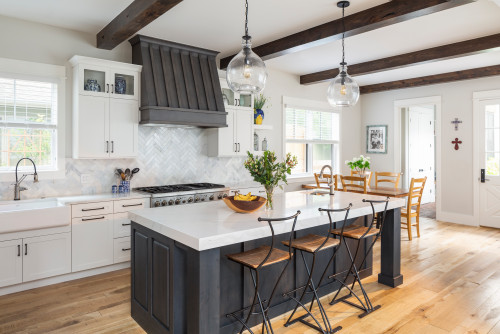 Photo by Austin Signature Homes – Contemporary white shaker kitchen cabinet in a modern home.
The longevity of your installation depends entirely on the raw materials used in its construction. Not all modular systems are created equal, and understanding the terminology is vital for making an informed purchase. Choosing a high-quality kitchen cabinet requires attention to these core details. It is not just about aesthetics; the structural foundation of each kitchen cabinet matters immensely.
3.1. Plywood Versus Furniture Board Boxes
The box forms the structural skeleton of the unit. Premium options utilize cabinet-grade plywood, constructed by laminating multiple thin layers of wood veneer with alternating grain directions. This cross-grained structure provides immense strength, excellent screw-holding capacity, and superior resistance to moisture and humidity. Conversely, lower-end options use particleboard or medium-density fiberboard for the main structure. While these engineered woods are heavy and flat, they are highly susceptible to water damage. They can swell rapidly if exposed to plumbing leaks, compromising the entire kitchen cabinet installation.
3.2. Solid Wood Face Frames and Doors
In traditional American-style cabinetry, the face frame provides rigidity and serves as the mounting point for hinges. High-quality systems utilize solid hardwoods like birch, maple, or oak for these frames, ensuring long-lasting durability. The doors themselves often feature a five-piece construction, known as a cope and stick joint, surrounding a solid or veneered center panel. This traditional joinery allows the wood to naturally expand and contract with environmental changes. It prevents cracking the delicate factory finish on your kitchen cabinet. Many homeowners exploring an ikea cabinet alternative prefer this solid wood construction.
3.3. Superior Drawer Box Construction
The drawer box is subjected to the most rigorous daily use of any component. The gold standard for drawer construction is the solid wood dovetail joint.
This ancient woodworking technique interlocks the side panels with the front and back panels using flared, trapezoidal pins and tails. This creates a mechanical bond that is nearly indestructible. It ensures the drawer inside your kitchen cabinet will never pull apart, even when heavily loaded with cast iron cookware or heavy ceramic dishes.
3.4. Advanced Hardware Mechanics
Hardware is the silent engine of your storage system. Premium modular kits include advanced, six-way adjustable concealed hinges, allowing for precise alignment of every door. Furthermore, full-extension, undermount drawer glides are essential. These tracks sit beneath the drawer box, maximizing interior space. They provide a smooth, silent, soft-close action that prevents slamming and protects the integrity of the wooden joints over time. A well-equipped kitchen cabinet relies on these advanced mechanics.
4. RTA Kitchen Cabinets in Toronto: Navigating Urban Spaces
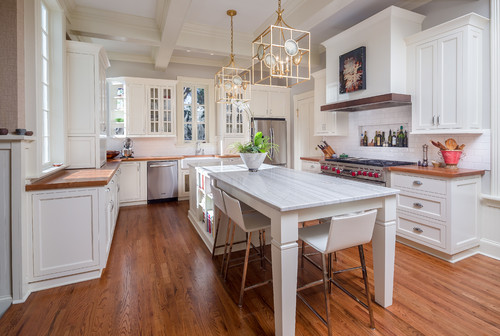 Photo by Merit In Home – Classic traditional kitchen cabinet with warm wood finish.
Homeowners residing in major metropolitan hubs face distinct architectural and logistical challenges when executing a major home improvement project. A renovation in Toronto requires careful planning to address unique spatial constraints, strict building regulations, and the fast-paced nature of urban living. Many top Kitchen suppliers offer specialized delivery services specifically designed for these high-rise buildings and bustling downtown streets. Finding a suitable kitchen cabinet that fits these criteria is vital for urban residents in Canada.
4.1. How Can Homeowners Optimize Storage in Compact Toronto Condos?
“Toronto condo owners can maximize their limited footprints by utilizing ceiling-height flat-packed cabinetry. Recent data shows this vertical approach increases usable storage capacity by up to 35%, all while flat-packed boxes bypass the logistical nightmares of narrow condo hallways and freight elevators.”
The skyline is dominated by high-rise living, and Toronto condos are notorious for their compact footprints. Maximizing every square inch of available space is not merely an aesthetic choice but a practical necessity. Flat-packed cabinetry is the ultimate solution for condominium renovations. Navigating bulky, pre-assembled boxes through tight condo corridors, narrow stairwells, and restrictive service elevators is a logistical nightmare. It often results in damaged drywall and scuffed furnishings. Flat-packed boxes for each kitchen cabinet easily slide onto standard moving carts and fit seamlessly into any elevator.
Furthermore, designing for these vertical spaces means utilizing tall wall units that stretch entirely to the ceiling. This captures previously wasted space for storing seasonal items or rarely used appliances. Toronto homeowners frequently opt for sleek, frameless European-style flat-packed units in high-gloss or matte acrylic finishes. These modern profiles reflect light beautifully. They create the illusion of a much larger, brighter room while maintaining a highly sophisticated urban aesthetic. Integrating a stylish kitchen cabinet into this layout elevates the entire design. Consider exploring options like nieu cabinet doors to customize the look.
4.2. Upgrading Historic and Detached Houses
Beyond the downtown core, older neighborhoods feature stunning historic architecture across Canada. However, renovating these classic structures reveals challenges like settling foundations, unplumb walls, and sloping floors. Modular units offer the flexibility needed to adapt to these charming but quirky environments. Installers can easily scribe end panels and trim pieces on-site to perfectly match uneven drywall, creating a flawless, built-in appearance. By blending traditional shaker-style doors with modern soft-close hardware, residents can honor the historic character of their property. Each newly installed kitchen cabinet perfectly balances heritage aesthetics with the comforts of contemporary engineering.
5. Strategic Kitchen Layout Planning
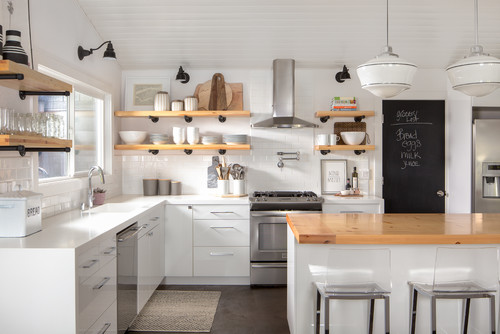 Photo by Design Shop Interiors – Farmhouse-style kitchen cabinet in a bright and airy room.
Before ordering a single component, you must develop a flawless spatial plan. The layout dictates the ergonomic efficiency of the room, determining how easily you can transition between food storage, preparation, and cooking zones. When planning your aesthetic, researching the best colors in Canada will ensure your design remains on trend and visually stunning. The placement of every kitchen cabinet matters for daily workflow.
5.1. Understanding the Work Triangle
Decades of architectural research have established the concept of the work triangle. This is the geometric relationship between the refrigerator, the sink, and the cooking range. For optimal workflow, the total distance of all three sides of this triangle should measure between thirteen and twenty-six feet. No single leg of the triangle should be shorter than four feet or longer than nine feet. Major traffic patterns should never cross through this primary work zone. A strategically placed kitchen cabinet enhances this vital flow.
5.2. Common Architectural Layouts
5.3. Accurate Measurement Practices
The success of modular integration relies entirely on the accuracy of your initial measurements. A discrepancy of just half an inch can derail an entire installation. Measure carefully before ordering your desired kitchen cabinet.
6. Final Thoughts on Your Canadian Renovation Journey
Choosing to undertake a major home improvement project in Canada is a deeply rewarding endeavor. It significantly enhances your daily quality of life and aggressively increases your property value. By moving away from restrictive retail options and embracing the incredible versatility, financial efficiency, and premium quality of ready-to-assemble systems, you take absolute control over your design vision. Selecting high-quality built-in cabinets allows you to achieve the custom look you desire without the extended wait times.
Through careful spatial planning, understanding structural material differences, and applying meticulous installation techniques, transforming a dated room is highly achievable. You can turn an inefficient room into a modern culinary masterpiece well within your grasp. Whether you are maximizing a sleek high-rise condo in a bustling city or expanding a sprawling suburban family space, these modular systems provide exact architectural flexibility. They deliver the enduring strength required to build a beautiful, organized, and welcoming heart for your home that will serve your family flawlessly for generations.