
IKEA Kitchen Design Ideas: 15 Stylish Layouts for Modern Homes
The strongest IKEA kitchen design ideas combine clean styling, efficient layout planning, and customized finishing details that make a modular kitchen feel intentional, elegant, and built for real daily life.
IKEA kitchen cabinets continue to attract homeowners because they offer a rare balance of style and flexibility. You can create a minimalist white kitchen, a warm transitional family space, a dramatic two-tone island layout, or a streamlined condo kitchen that feels bigger than it is. The real design advantage comes from how easily the system adapts to different room sizes, cabinet fronts, hardware choices, and storage strategies. If you want the broader picture on quality, pricing, and long-term value, read our complete IKEA kitchen cabinets guide.
This article is intentionally focused on inspiration and design. Instead of repeating broad review content, it brings together the strongest ideas from your existing styling and smart-ideas pages into one cleaner, stronger supporting article built around a single intent: IKEA kitchen design ideas. It also naturally supports related searches such as IKEA kitchen ideas, IKEA kitchen inspiration, IKEA kitchen cabinet ideas, IKEA kitchen styling ideas, and IKEA kitchen design ideas Canada.
The goal is to help homeowners choose layouts, cabinet fronts, colors, islands, and finishing details that create a stylish and functional room. In other words, this page answers a simpler design question than the main guide: not just whether IKEA cabinets are worth considering, but how to make them look exceptional once you decide to use them.
Great kitchen design is never only about aesthetics. A successful room must also support workflow, lighting, storage, movement, and daily routines. That is why the best IKEA kitchen ideas always balance inspiration with function. The kitchen should look beautiful in photos, but it should also feel easy to cook in, easy to clean, and easy to live with every single day.
1. Why IKEA Works So Well for Modern Kitchen Design
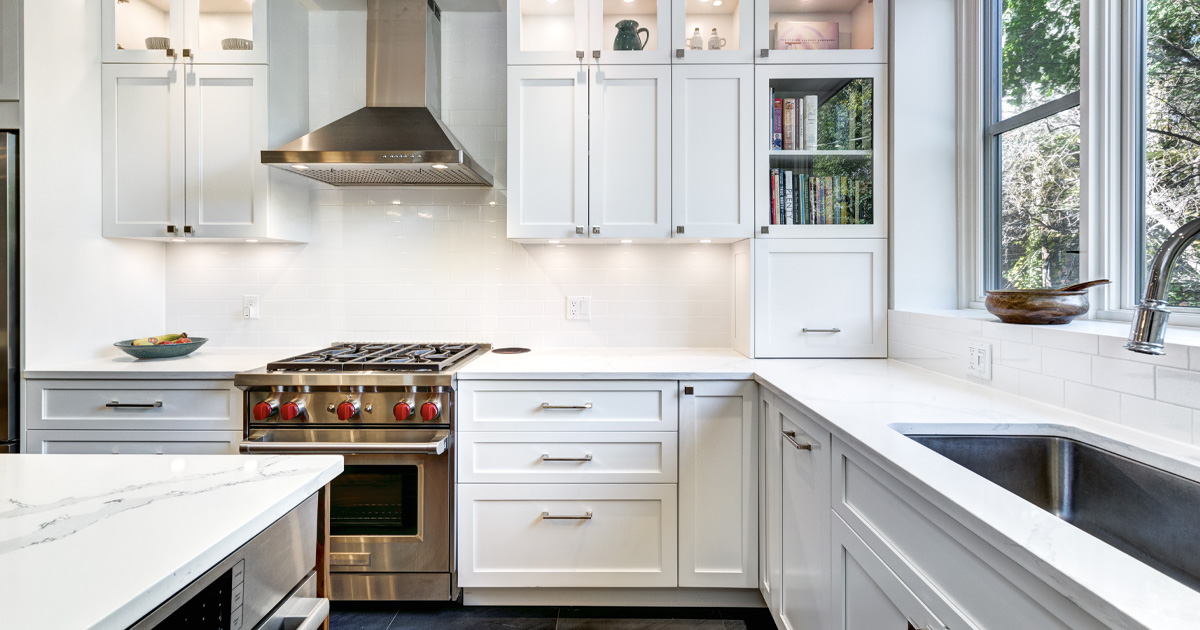
IKEA kitchens work especially well for design-led remodels because the system is modular without looking purely generic. That distinction matters. Many mass-market cabinets can fill a room, but not every system helps you create a kitchen with a deliberate point of view. IKEA gives homeowners a flexible foundation that can be shaped into many different aesthetics, from crisp Scandinavian minimalism to warm transitional styling or bold black-and-white contrast.
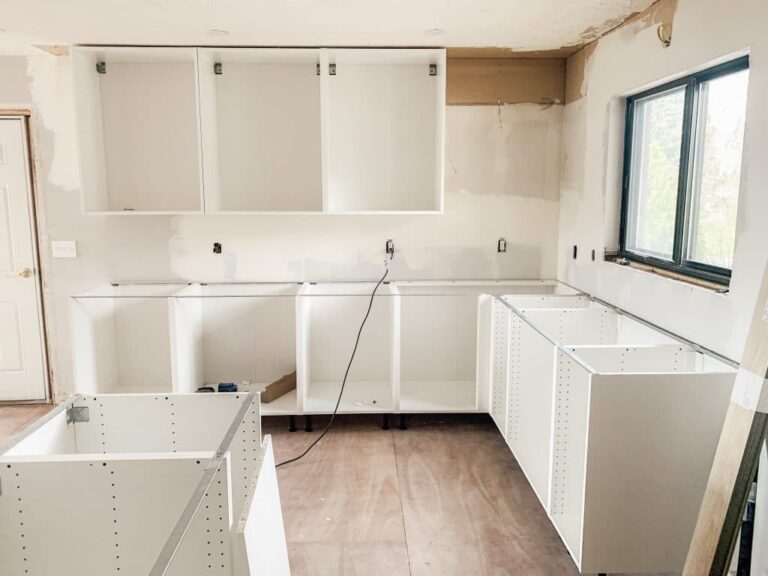
One major advantage is front selection. Even when the internal cabinet logic stays consistent, the visual result can change dramatically depending on whether you choose slab fronts, shaker-inspired doors, matte finishes, integrated handles, or contrasting hardware. Another advantage is layout adaptability. Small condos, long galley kitchens, L-shaped family layouts, and island-centered open-concept kitchens can all be planned within the same design system.
The result is that IKEA can look much more expensive than many homeowners expect, especially when the design is handled thoughtfully. Cabinet proportions, filler strategy, end panels, hardware consistency, lighting, and countertop material all shape the final impression. That is why design matters so much. The cabinets are only part of the picture; the room feels refined when every visible element works together.
Another reason IKEA works well is that it allows homeowners to start with a simple framework and personalize the result over time. You can keep the layout straightforward and update the look with new hardware, lighting, stools, accessories, or even selected decorative panels later. This flexibility makes IKEA kitchen inspiration especially appealing for homeowners who want a strong base design now without locking themselves into a rigid visual direction for the next decade.
2. What IKEA Kitchen Design Ideas Work Best for Small Kitchens?
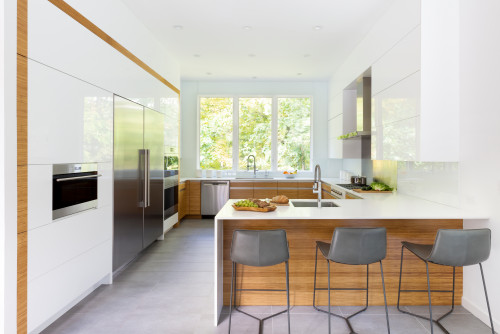
Short answer: The most effective small-space IKEA kitchen design ideas use light cabinet fronts, full-height storage, deep drawers, and visually quiet finishes. A smaller room looks better when the layout reduces clutter instead of trying to overpower the space.
In a compact kitchen, every design choice must earn its place. The strongest approach is usually to simplify the visual field. Matte white, soft greige, pale oak, and smooth-painted fronts help bounce light around the room and create a cleaner impression. When upper cabinets feel too heavy, a mix of closed storage and open shelving can help the room breathe, but that only works if the shelves are styled carefully and not overloaded.
Vertical storage is equally important. Many homeowners underestimate how much visual clarity comes from moving items upward instead of outward. Tall pantry units, full-height wall cabinets, and organized drawer systems keep the countertop cleaner, which immediately makes the room feel more refined. The best small-kitchen design does not rely on decorative tricks alone. It uses storage discipline to create beauty.
Another smart move is to keep finishes consistent. If your kitchen is small, avoid too many competing tones in the cabinets, backsplash, flooring, and countertops. A simpler palette almost always looks more premium. If you want a broader overview of how design fits into overall IKEA cabinet planning, see our IKEA kitchen cabinets guide.
Small-space success also depends on visual rhythm. Repeating the same front style, keeping hardware consistent, and limiting contrast between large surfaces can make a compact room feel calmer and bigger. These are the kinds of IKEA kitchen cabinet ideas that may sound subtle, but they have a major impact once the space is complete.
2.1. Small-Space Design Priorities That Matter Most
- ✓ Use light cabinet fronts to make the room feel more open.
- ✓ Replace more lower doors with drawers for easier access and better organization.
- ✓ Keep the island small or skip it if it interrupts movement.
- ✓ Limit visible countertop appliances to preserve a cleaner design.
- ✓ Choose one or two dominant finishes instead of layering too many colors.
3. Best IKEA Kitchen Layout Ideas for Different Home Types
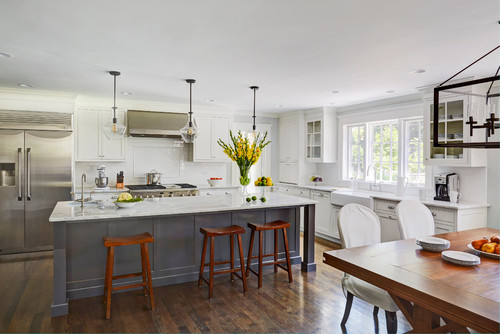
Strong design always begins with the right layout. A beautiful cabinet front cannot rescue a kitchen that functions poorly. One-wall layouts often work best in condos and secondary suites where space is limited and circulation matters more than statement-making storage. Galley kitchens are practical when you want dense efficiency and can keep the workflow disciplined. L-shaped kitchens suit many family homes because they balance prep space with movement. U-shaped kitchens maximize storage and counter area, while island-centered kitchens work best when the room has enough width to support both function and social flow.
The best IKEA kitchen ideas are never one-size-fits-all. A downtown condo may need a sleek one-wall composition with integrated appliances and minimal visual clutter. A townhouse may benefit from an L-shaped kitchen with a compact island and plenty of drawers. A larger detached home may handle a dramatic U-shape or an oversized island much better. The right layout should follow how the household cooks, stores, and gathers rather than chasing a trend that looks good but does not fit the room.
| Layout Type | Best For | Design Strength |
|---|---|---|
| One-Wall | Condos, compact homes, secondary suites | Creates a minimal, clean-lined look with a simple visual rhythm |
| Galley | Narrow homes, efficient cooks, urban remodels | Supports strong workflow and balanced parallel storage |
| L-Shaped | Townhouses, family kitchens, flexible remodels | Leaves open space for dining, islands, or easier movement |
| U-Shaped | High-storage homes, serious cooks | Maximizes cabinet volume and countertop continuity |
| Island-Centered | Open-concept homes, entertaining spaces | Makes the kitchen feel architectural, social, and high-end |
4. Modern IKEA Kitchen Design Ideas for Open-Concept Homes
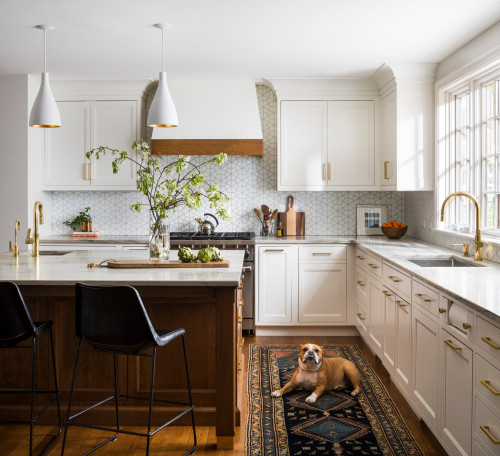
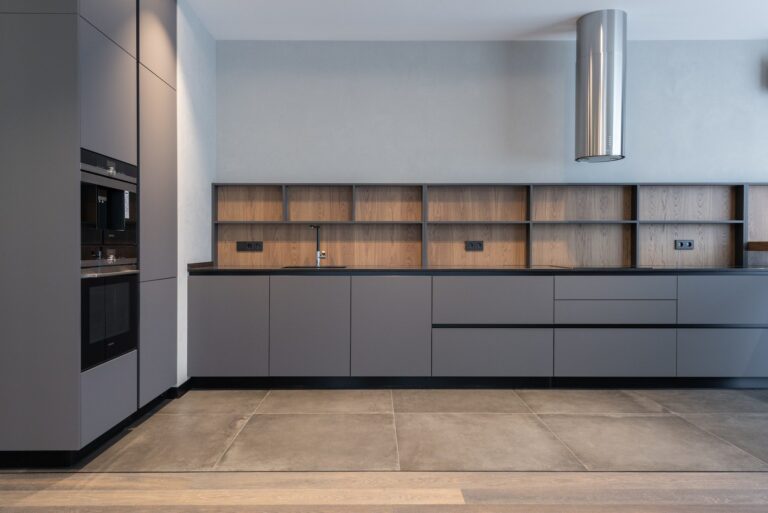
Open-concept kitchens require more visual discipline because the room is visible from living and dining spaces. In these homes, the kitchen is not only a workspace. It is part of the architecture of the entire floor. That means the cabinet fronts, island finish, hardware, and lighting should feel connected to the rest of the home rather than treated as a separate decorative zone.
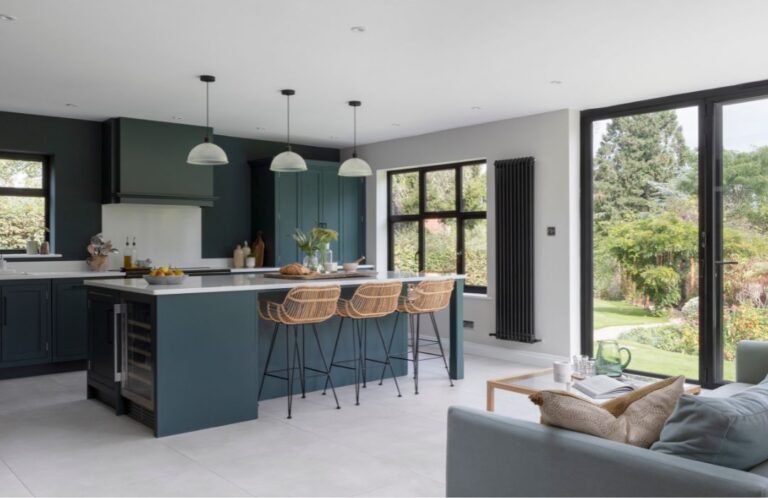
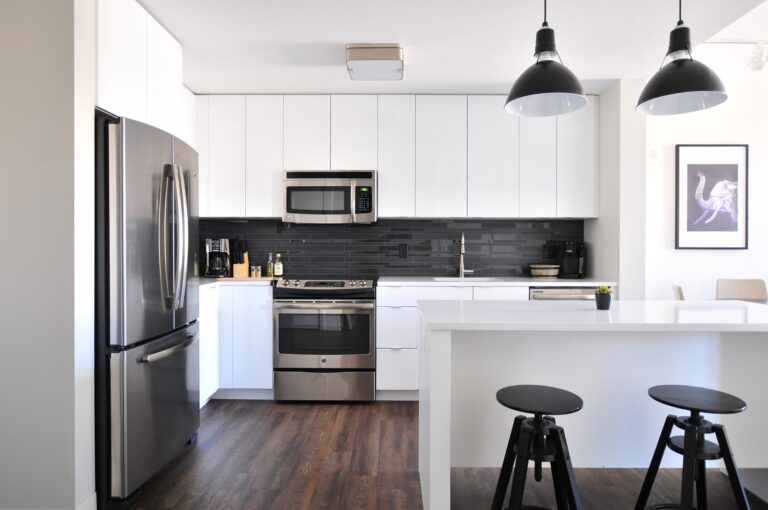
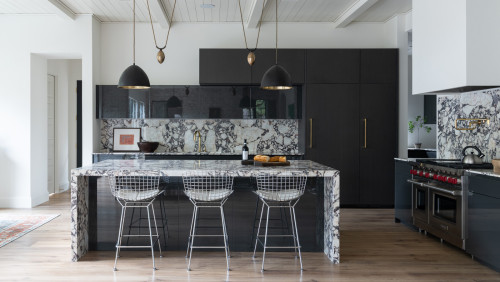
The best open-concept IKEA kitchens use fewer, stronger choices. A large island in a contrasting color can anchor the room, while perimeter cabinets stay lighter and quieter. Open shelving works best in moderation. Integrated panels around refrigeration help the kitchen feel more seamless. When the room is wide enough, repeating one finish across tall cabinets and the island base can create a calmer, more custom effect.
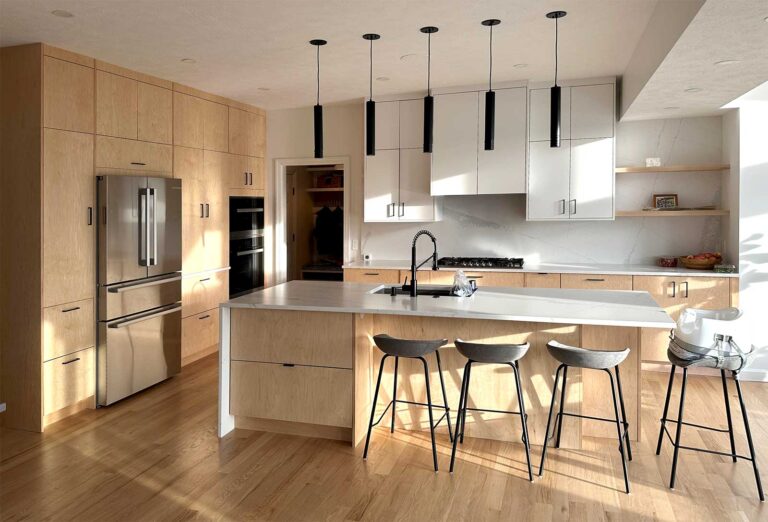
Another effective approach is to give the island a furniture-like identity. Waterfall countertops, darker paint tones, wood-look panels, and statement pendants can turn a simple modular island into the visual centerpiece of the room. This is where IKEA kitchen inspiration becomes most exciting: the cabinetry system may be modular, but the finished space does not need to look generic.
Open-concept homes also benefit from cleaner transitions between the kitchen and surrounding rooms. Repeating accent colors from the living area, matching metal finishes, or coordinating the island stools with nearby furniture can help the whole floor feel more deliberate. These details are central to strong IKEA kitchen styling ideas because they turn the kitchen into part of the home’s larger visual story.
5. Best IKEA Cabinet Fronts for Different Design Styles
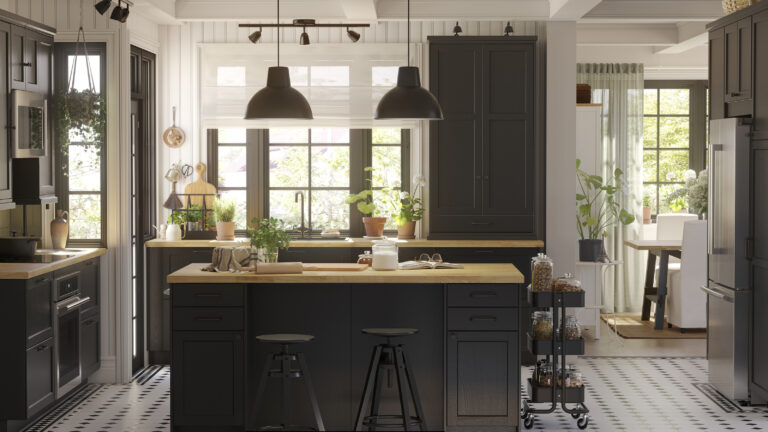
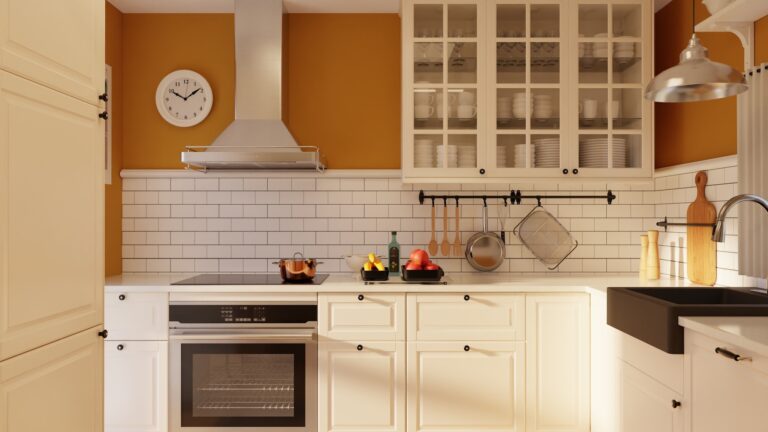
Cabinet fronts define the mood of the kitchen more than any other single choice. If the internal system is the structure, the fronts are the personality. Sleek slab fronts are ideal for contemporary spaces that want simplicity, handle-free detailing, and a smooth architectural surface. Matte painted fronts work beautifully when you want a refined but soft modern look. Shaker-inspired fronts are better for transitional kitchens, where classic details and cleaner contemporary lines need to meet in the middle.
When homeowners search for IKEA kitchen cabinet ideas, they often focus first on the cabinet front because it is the most visible design decision in the room. That instinct makes sense. Fronts establish whether the kitchen will feel airy, cozy, minimal, dramatic, traditional, or contemporary. Choosing the right front style early also helps every later decision feel easier, from hardware to backsplash to lighting.
| Front Style | Design Direction | Best Use |
|---|---|---|
| VOXTORP | Ultra-modern, streamlined | Open-concept homes and handle-free contemporary kitchens |
| AXSTAD | Soft modern, understated | Family kitchens that want a calm and polished look |
| VEDDINGE | Bright, minimal, flexible | Small kitchens, clean white layouts, and timeless remodels |
| BODBYN | Transitional, more classic | Homes that want a softer, more traditional visual language |
5.1. Can IKEA Kitchen Cabinets Look High-End?
Short answer: Yes. IKEA cabinets look far more high-end when you combine the right front style, consistent hardware, well-finished end panels, careful countertop and lighting choices, and a restrained color palette. The designer look comes from the full composition, not the cabinet box alone.
The most expensive-looking kitchens almost always share the same habits: disciplined color palettes, fewer visual interruptions, stronger detail repetition, and better finish transitions. Matching side panels, full-height pantry runs, integrated fridge panels, and larger drawers all contribute to a more custom impression. High-end design is usually quieter, not louder.
This is why so many successful IKEA kitchen styling ideas focus on control rather than excess. Instead of adding more decorative elements, they simplify the room and make every surface feel intentional. A cleaner visual line across the cabinets, coordinated hardware, and a well-composed countertop selection can make the kitchen feel much more elevated without overcomplicating the design.
6. Two-Tone IKEA Kitchen Design Ideas That Feel More Custom
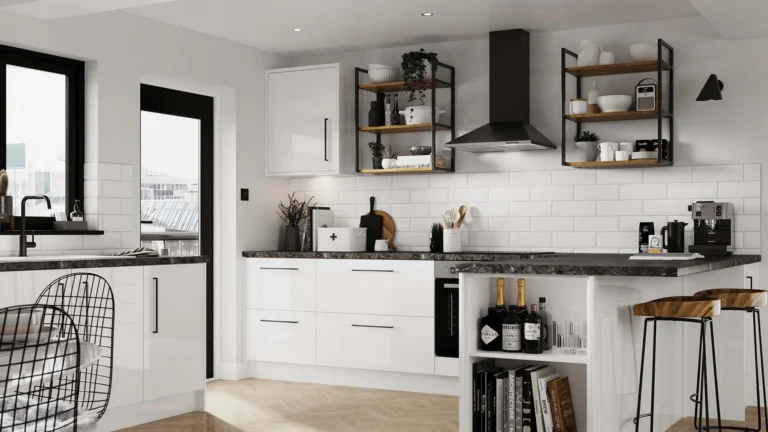
Two-tone design remains one of the most effective ways to make a modular kitchen feel more tailored. The easiest version is a lighter perimeter with a darker island. This creates depth without making the whole room feel heavy. In smaller kitchens, a gentler contrast often works better: warm white uppers with soft taupe lowers, or pale greige perimeters with a charcoal island.
The reason two-tone schemes work so well is that they help organize the architecture of the kitchen visually. Instead of reading as one flat wall of cabinetry, the room gains focal points and layering. The key is to keep the contrast intentional. Too many tones can make the room feel busy, while a controlled two-tone approach usually feels more sophisticated.
If you use two tones, repeat one accent elsewhere so the design feels unified. That can be black hardware repeated in pendants, a wood note repeated in stools, or a darker island color repeated in the range hood, shelving brackets, or nearby furniture.
Two-tone concepts are especially useful for homeowners looking for IKEA kitchen design ideas Canada because many Canadian homes mix open-concept living with practical daily wear. A two-tone layout helps balance beauty and function: the lighter surfaces keep the room open through darker seasons, while the richer tones on lower cabinets or islands hide everyday wear more gracefully.
7. IKEA Kitchen Island Design Ideas That Add Function and Style
A kitchen island should do more than fill space. It should improve how the room works. In smaller homes, that may mean adding storage and extra prep room. In larger homes, it may mean creating the social center of the kitchen. The best island design ideas balance movement, seating, and storage without making the room feel blocked or overbuilt.
A strong IKEA island design often uses deep drawers on the working side and cleaner panel detailing on the seating side. This keeps the island functional without looking overly busy from the living area. Waterfall countertops, darker base tones, wood-look finishes, or contrasting hardware can all help the island read more like furniture than a row of cabinets.
Islands are also one of the best places to add personality. If the perimeter stays simple and quiet, the island can carry more visual energy. That might come through a deeper color, a richer wood tone, or a bolder lighting composition. When done well, the island becomes the feature that gives the whole kitchen identity.
For homeowners gathering IKEA kitchen inspiration, the island is often the moment that separates a standard-looking remodel from a memorable one. It can create symmetry, support entertaining, and add valuable hidden storage, all while shaping how the kitchen feels as part of the home. A successful island is not only beautiful; it also improves circulation, prep, and seating in a way that feels effortless.
8. Smart Storage Ideas That Improve Kitchen Design
Good storage is one of the most underrated design tools in any kitchen. A room looks better when it functions better. Deep drawers for dishes and cookware reduce awkward stacking. Pantry pull-outs make everyday items easier to reach. Integrated waste and recycling keep visual noise off the floor. Internal dividers keep utensils, containers, and cooking tools from spilling into visible clutter.
This is especially important in minimalist and modern kitchens. A sleek design only feels luxurious when the surfaces stay calm. If everything ends up on the countertop because the storage plan was weak, even beautiful cabinet fronts will look less effective. Smart storage is not separate from design. It is what allows design to succeed in real life.
One of the best ways to strengthen a design plan is to create storage by zone. Keep cookware near the range, dishes near the dishwasher, pantry items near prep areas, and coffee tools in one organized station. This kind of invisible logic makes the kitchen feel more natural to use, and that ease is part of what people often describe as good design.
Some of the most practical IKEA kitchen cabinet ideas come from thinking about what should disappear. Extra baking trays, spices, lunch containers, cleaning products, and daily-use utensils all need designated homes. When a kitchen has enough internal structure, the surfaces stay visually calm. That quietness is one of the strongest forms of luxury in a modern kitchen.
9. How to Style Colors, Lighting, Hardware, and Finishes for a Designer Look
Cabinet styling does not end with the boxes and fronts. Lighting, hardware, faucet finishes, shelving, countertop material, and color palette all shape whether the kitchen feels cohesive. Good hardware should feel consistent with the cabinet style. Minimal slab fronts usually look best with simpler pulls or integrated options, while transitional fronts often benefit from more defined handles or knobs.
Lighting should support the design language rather than compete with it. A pair of sculptural pendants can elevate an island, but they should still relate to the kitchen’s finish palette. Under-cabinet lighting makes the room feel more polished and also improves function. It is one of the easiest upgrades for creating a more considered final result.
Countertop and backsplash choices should also reinforce the cabinet direction. If the cabinets are the statement, keep the stone simpler. If the cabinets are quiet, the backsplash can carry more texture or contrast. The strongest kitchens almost always have one clear visual hierarchy instead of five competing moments.
Color deserves just as much attention. Warm whites, soft mushroom tones, muted greens, deep charcoal, black, and wood-inspired finishes are all strong choices, but they should be selected in relation to the room’s natural light. In many Canadian homes, long winters and changing daylight make warm neutrals especially appealing because they keep the room feeling brighter and more welcoming year-round. This is one reason IKEA kitchen design ideas Canada often lean toward balanced tones rather than ultra-cold palettes.
If you want the room to feel more curated, choose one hero material and let the rest support it. That hero could be a dramatic island color, a veined quartz countertop, a warm wood accent, or a distinctive lighting pair. The supporting finishes should then feel quieter. This is one of the most reliable IKEA kitchen styling ideas for creating a designer look without making the room feel overcrowded.
10. Common IKEA Kitchen Design Mistakes to Avoid
Strong inspiration is useful, but the best design ideas only work when the common mistakes are avoided. One of the biggest errors is mixing too many finishes in one kitchen. White uppers, dark lowers, a busy backsplash, patterned stone, brass hardware, open shelves, and statement pendants can all look attractive on their own, but together they often compete instead of cooperate. A successful room usually feels edited.
Another common mistake is choosing an island that is too large for the room. Homeowners often love dramatic islands in photos, but an oversized island can hurt circulation and make the room feel crowded. The same goes for overusing open shelves. A little openness can create visual relief, but too much can make the kitchen harder to keep tidy and less timeless.
Poor hardware coordination is another subtle problem. If the faucet, cabinet pulls, lighting, and nearby stools all speak different visual languages, the room may feel pieced together even if each item is individually attractive. Good IKEA kitchen ideas feel unified. They rely on repetition, not randomness.
Finally, do not underestimate the visual importance of finishing pieces. End panels, fillers, toe kicks, and appliance integration are not minor afterthoughts. They help the room look complete. Many kitchens fail to feel polished not because the cabinets were wrong, but because the transitions around them were handled carelessly.
11. Final Thoughts on the Best IKEA Kitchen Design Ideas
The best IKEA kitchen design ideas are not about chasing one trend. They are about choosing the layout, front style, color balance, island design, and storage strategy that fit your home and how you actually live. A small condo kitchen may need visual lightness and vertical efficiency. A family kitchen may need deeper drawers, a stronger island, and a more forgiving finish palette. An open-concept remodel may need quieter perimeter cabinets and a more architectural focal point.
That is why this page works best as a supporting design article. It helps you imagine what your IKEA kitchen can become. When you are ready to compare design ideas with broader questions around quality, planning, cost, and long-term value, return to the full IKEA kitchen cabinets guide.
Great design is not only about appearance. It is about how a room feels to move through, cook in, clean, and live with every day. When an IKEA kitchen is designed thoughtfully, it can deliver far more than storage. It can create a kitchen that feels calm, personalized, and genuinely complete.
Whether you are collecting IKEA kitchen inspiration for a new build, refreshing a dated family kitchen, or planning a smaller condo remodel, the same principle applies: the strongest results come from clarity. Choose a clear design direction, repeat the right materials, support the look with strong storage, and let every finish contribute to one cohesive final impression. That is how simple modular cabinetry becomes a beautiful, highly livable kitchen.
Ready to Style Your IKEA Kitchen More Intentionally?
Explore layout planning, quality, cost, and long-term value in our IKEA kitchen cabinets guide, then use these design ideas to shape a kitchen that looks more custom, feels more functional, and fits your home with confidence.
Need expert help? Contact our team at rtadepot.ca or call +1 888 973 5636.