
Are IKEA kitchen cabinets a good fit for small kitchens? A 2026 Planning Guide
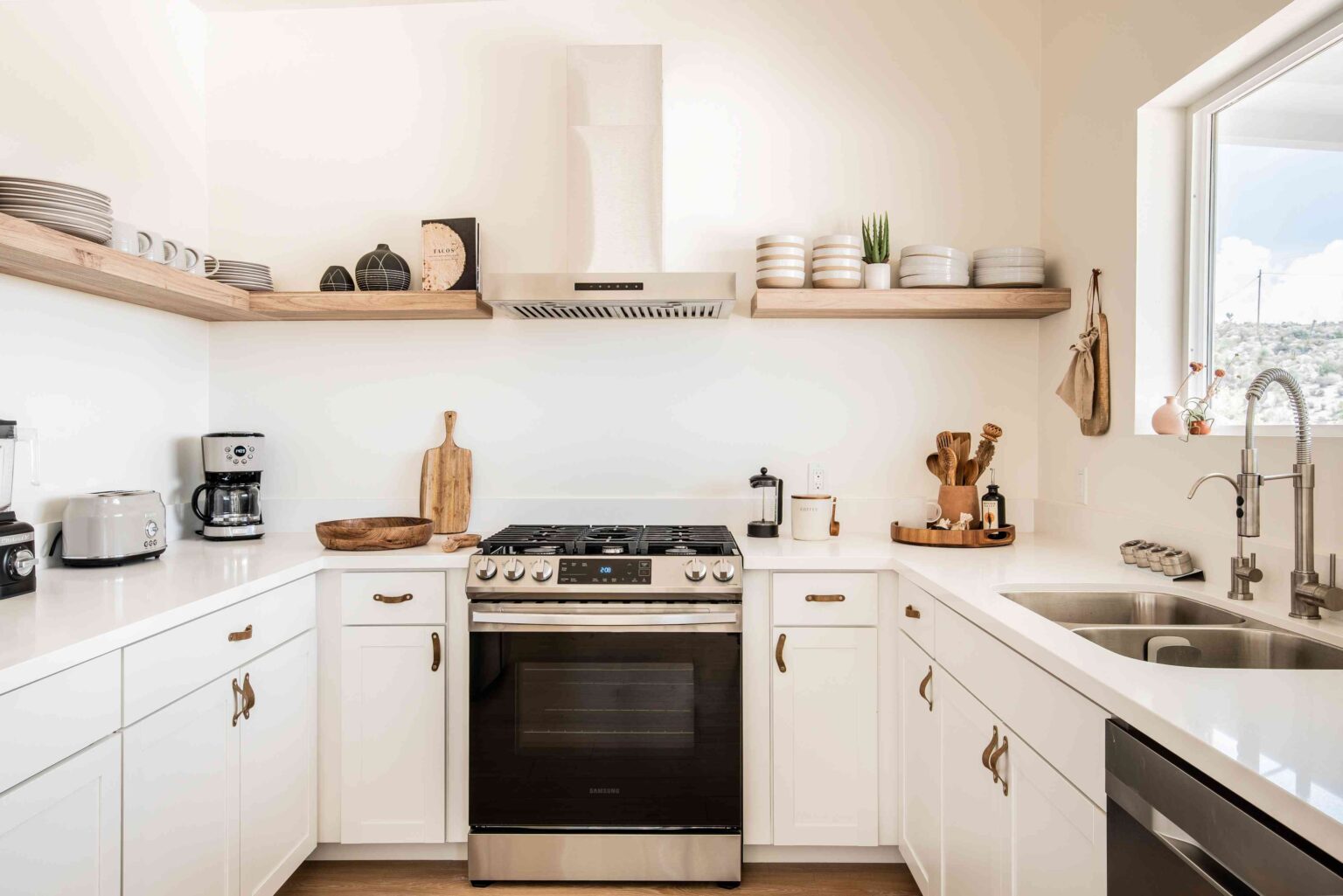
When planning a renovation in a tight space, many homeowners start by asking: Are IKEA kitchen cabinets a good fit for small kitchens? In 2026, urban living in dense areas like Toronto or Mississauga requires a focus on high-density storage and modular flexibility. IKEA kitchen cabinets for small kitchens have become a standard choice because they allow for a customized look without the long lead times of bespoke cabinetry. By utilizing the SEKTION grid system, you can adapt your layout to fit narrow walls and high ceilings, maximizing every available inch of your floor plan.
However, a successful renovation involves more than just picking a style. Making the right choice for your home means evaluating the trade-offs between modular convenience and the long-term durability of the materials. Before you finalize your design, consulting an IKEA Kitchen Cabinets Review can provide insight into how these particle-board systems hold up in high-moisture environments. This guide breaks down the practical strategies for using modular cabinetry to solve common small-space frustrations.
1. How do SEKTION systems help in compact kitchen layouts?
Direct Answer: Modular cabinets are effective in tight spaces because they offer 15-inch deep base units and 40-inch tall wall units. This allows homeowners to reclaim vertical wall space and maintain wider walkways in narrow galley kitchens, which is often difficult with standard 24-inch deep cabinetry.
The primary benefit of IKEA kitchen cabinets for small kitchens is the ability to deviate from standard industry depths. In a narrow room, a 24-inch deep counter on both sides can make the space feel cramped. By using 15-inch deep base cabinets on one side, you can create a secondary prep surface or a shallow pantry wall while significantly increasing the floor space available for movement. This strategy is a cornerstone of IKEA small kitchen design ideas for 2026.
Vertical storage is the second key factor. Most traditional cabinets leave a gap at the ceiling. By using 40-inch tall units or stacking smaller modular boxes, you can extend your storage all the way to the top. This provides a dedicated home for seasonal items or large appliances that would otherwise take up valuable real estate in your lower drawers. While this “ceiling-height” look is aesthetically pleasing, its main value is functional—reclaiming storage area that is otherwise wasted.
2. Which cabinet organizers are essential for narrow spaces?
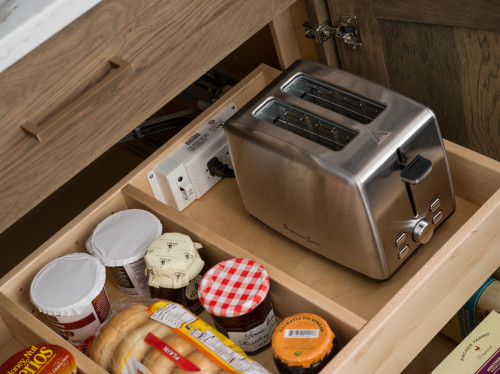
Direct Answer: Full-extension Maximerat drawers and inner-drawer dividers are the most practical upgrades. In a small kitchen, drawers provide better accessibility than doors, as they bring the contents to the user rather than forcing them to reach into dark, deep shelves.
In 2026, interior organization has evolved to include more specialized inserts. When organizing IKEA kitchen storage for small spaces, the goal is visibility. Deep drawers allow you to stack pots and pans vertically, while inner drawers can hide shallow items like cutlery or textile napkins. This tiered approach ensures that you aren’t wasting the upper half of a deep cabinet’s interior volume.
Corner solutions have also improved. Instead of the old “Lazy Susan,” modern carousels swing entirely out of the cabinet. This ensures that heavy mixers or large stockpots are easily accessible. Many homeowners find that Small kitchen storage solutions using modular cabinets work best when paired with wall-mounted rail systems. These rails move knives, spices, and utensils off the limited countertop area and onto the backsplash, freeing up the primary work surface for food preparation.
Comparison: Modular Sektion vs. Professional RTA Options
While IKEA is the go-to for many, professional Ready-to-Assemble (RTA) cabinets offer different construction benefits that may be better for certain households. Below is a comparison of their typical features.
3. Understanding IKEA kitchen cabinets quality and maintenance
Direct Answer: The IKEA kitchen cabinets quality is highly dependent on the choice of door fronts and proper installation. While the Blum-made hardware is excellent, the particle board boxes require high-quality edge sealing—especially around the sink—to prevent moisture from causing long-term damage.
Many homeowners worry about the lifespan of particle board in a kitchen. In a small space, humidity from cooking and dishwasher steam is often trapped in a smaller area. To maintain IKEA kitchen cabinets quality, it is vital to apply a silicone bead to all exposed seams during assembly. This simple step can prevent the core from swelling if a minor leak or condensation occurs under the sink.
For those who want the modular look but higher durability, some choose a “hybrid” approach—using modular boxes with custom doors or professional-grade quartz countertops. This combination provides a premium feel while keeping the overall project cost manageable. Whether you choose best IKEA cabinets for compact kitchens or a plywood alternative, the key to longevity is proper ventilation and moisture management.
4. Precision Sizing and the Kitchen cabinet dimensions guide
Small kitchen design requires high precision. When measuring for IKEA kitchen cabinets for small kitchens, you must account for “filler panels” and “clearance.” A common planning mistake is placing a drawer-base cabinet flush against a wall without a filler strip. If the wall isn’t perfectly straight, or if the drawer handle protrudes, you may find that the drawer cannot open fully. Consult our Kitchen cabinet dimensions guide to ensure your layout leaves enough room for appliance doors to swing and drawers to slide smoothly.
In a narrow kitchen, every millimeter counts. Modular units come in fixed widths (12″, 15″, 18″, etc.), which often leaves a small gap at the end of a wall. Instead of using a large, decorative filler, try to utilize that space by shifting cabinet sizes. For example, replacing a 24-inch cabinet with an 18-inch one might allow you to fit a 9-inch pull-out spice rack. Tactical planning is what allows a small kitchen to feel far more capable than its footprint suggests.
5. Realistic expectations for IKEA kitchen cabinets cost
Budgeting for a renovation in 2026 involves more than just the price of the boxes. While the IKEA kitchen cabinets cost is generally lower than custom work, you must factor in delivery fees, tax, and the time required for assembly. For a typical small kitchen in Ontario, material costs often fall between $3,000 and $7,500. Professional installation can add another $1,500 to $3,000, depending on the complexity of the rail system and the need for electrical or plumbing rough-ins.
Many urban homeowners find that investing in higher-quality countertops and lighting is the best way to elevate the look of modular cabinetry. A stone or quartz surface provides better heat and moisture resistance than wood or laminate, making it a sound investment for the long-term value of your home. By focusing your budget on high-use areas—like hardware and surfaces—you can achieve a high-end appearance on a more practical budget.
6. Visual design: making the small feel large
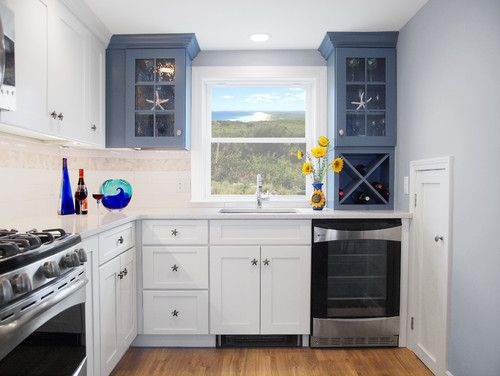
Beyond storage, the choice of colors and finishes determines the perceived size of your kitchen. Light-reflective surfaces, such as high-gloss white or light gray, bounce natural light around the room, making a narrow aisle feel wider. Glass-fronted upper cabinets can also create a sense of depth, allowing the eye to see through to the back of the cabinet rather than stopping at the door surface. Using these visual cues, combined with integrated under-cabinet lighting, ensures that your kitchen feels airy and organized.
Planning a small kitchen renovation?
Getting the layout right in a compact space is a complex task. At rtadepot.ca, we provide the expertise needed to balance durability and style. Whether you need a detailed Kitchen quote and layout or are looking for professional cabinetry alternatives to IKEA kitchen cabinets for small kitchens, our team is here to help you achieve your goals.
CONTACT OUR TEAM: +1 888 973 5636