
The Problem with Solid Wood Cabinets in Humid Climates: A Comprehensive Guide for Homeowners in Canada
Homeowners across Canada face a unique set of challenges when it comes to maintaining a stable and beautiful home environment. From the damp, salt-laden air of the British Columbia coast to the intense, humid summers of Southern Ontario and Quebec, the climate places significant stress on natural building materials.
While the aesthetic appeal of traditional timber is undeniable, the biological nature of wood often leads to disappointment when it is used for a kitchen cabinet in these variable environments. Understanding how humidity interacts with solid wood is essential for making an informed investment in your home.
This guide explores the science behind wood stability, the specific risks associated with solid lumber in Canadian homes, and the superior engineered alternatives that ensure your kitchen remains flawless for decades. We will examine why a kitchen cabinet made from modern materials often outperforms traditional options and how you can achieve a high-end look without the headaches of warping and cracking.
1. Why Does Humidity Affect Solid Wood Stability in Canada?
Quick Answer: Wood is hygroscopic, meaning it acts like a biological sponge. When relative humidity (RH) rises above 55%, cells absorb moisture and expand; when RH drops below 30%, they shrink. In Canada, where indoor RH can swing by 40% between seasons, a solid wood kitchen cabinet door can expand by up to 1/4 inch, causing structural stress and finish failure.
To truly appreciate the problem, one must first understand the material. Wood is hygroscopic, meaning it constantly exchanges moisture with its surrounding environment to reach a state of equilibrium. This is a natural function of the tree’s biology, designed to transport water from roots to leaves.
However, when that tree is harvested and turned into a kitchen cabinet, this characteristic becomes a liability. When the relative humidity in your home rises, the cells within the wood absorb water vapor and expand. Conversely, when the air dries out during a Canadian winter when the furnace is running, the wood releases that moisture and shrinks.
This constant cycle of expansion and contraction creates internal stress on the joinery and finish of the cabinetry. While a single piece of floating floorboard might have room to move, a precisely constructed kitchen cabinet door has very little tolerance for dimensional changes.
1.1. The Impact of Relative Humidity Fluctuations
In many parts of Canada, indoor humidity can swing wildly between seasons. In the summer, windows are often open, allowing humidity levels to spike above 60%. In the winter, heating systems can drive indoor humidity down below 30%. This 30% swing is catastrophic for solid wood.
A kitchen cabinet door made of solid wood can expand or contract by more than a quarter of an inch across its width during these transitions. This movement is often perpendicular to the grain, meaning the door gets wider or narrower, but not necessarily taller.
When a kitchen cabinet frame remains stationary while the center panel expands, it can break the paint seal or even crack the frame itself. This is a primary reason why manufacturers are moving away from solid wood for painted finishes in favor of more stable substrates.
2. What Common Problems Arise with Wood Cabinets in High Humidity?
Quick Answer: The most frequent issues include warping (twisting of the door), cupping (edges curving higher than the center), and “witness lines” (cracks in the paint at joints). Functional failures are also common, where swollen wood causes the kitchen cabinet drawers to bind or doors to rub against frames, preventing proper closure.
Homeowners who install solid wood cabinetry in humid zones often report a specific set of issues within the first two years of ownership. These problems are not indicative of poor craftsmanship, but rather the improper application of a material in an unstable environment.
2.1. Warping and Cupping
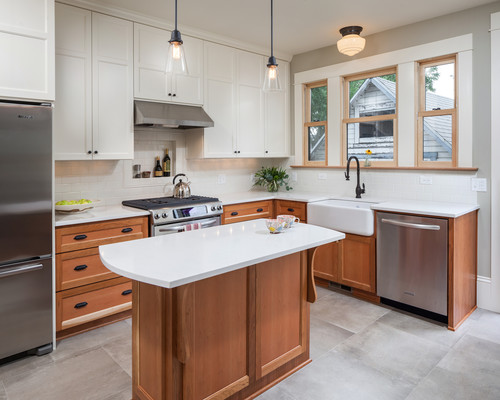
Warping is the most visible sign of moisture distress. It occurs when a kitchen cabinet door absorbs moisture unevenly. If the front of the door facing the humid kitchen air absorbs water faster than the back of the door facing the cabinet interior, the wood will bow.
Cupping is a similar phenomenon where the edges of a board become higher than the center. This creates a wavy appearance on the surface of your kitchen cabinet, destroying the sleek, reflective quality of a high-gloss or semi-gloss finish. Once a piece of wood has warped significantly, it is very difficult to return it to its original flat state.
2.2. Finish Degradation and Joint Separation
For those who desire a painted kitchen cabinet, solid wood presents a major aesthetic risk. Cabinet doors are typically constructed with a frame and a center panel. The points where the frame pieces meet are called joints.
As the wood expands and contracts, these joints open and close microscopically. Over time, this movement creates hairline cracks in the paint. Moisture can then intrude into these cracks, causing the paint to peel or chip. This is often referred to as “witness lines,” and it can make a brand-new kitchen look aged and worn very quickly.
2.3. Functional Impairment
Beyond looks, the physical swelling of wood can stop your kitchen cabinet from functioning correctly. Drawers may become stuck in their tracks, requiring force to open. Doors may expand to the point where they rub against each other or the face frame, preventing them from closing flush.
This friction not only ruins the experience of using your kitchen but also damages the protective finish on the edges of the doors. A kitchen cabinet that does not close properly is also less effective at keeping dust and grease away from your clean dishes.
3. Evaluating Material Suitability for Your Home
Choosing the right material is the first step toward a long-lasting renovation. It is crucial to assess whether your home’s environment is conducive to solid wood or if enhanced alternatives are better suited for your specific region in Canada.
3.1. Measuring Your Indoor Environment
Before purchasing a kitchen cabinet, we recommend monitoring your home’s humidity levels with a hygrometer. The ideal relative humidity for solid wood furniture is typically between 40% and 50%. If your home frequently deviates from this range, solid wood is a high-risk choice.
Many modern Canadian homes have HVAC systems with humidifiers and dehumidifiers to control this, but older homes or those in coastal regions may struggle to maintain this tight tolerance. In these cases, choosing an engineered kitchen cabinet is not just a style choice; it is a structural necessity.
3.2. The Stability of Engineered Alternatives
We often suggest materials like Marine Grade Plywood or High-Density Fiberboard (HDF) for humid areas. These materials are engineered to have no specific grain direction, which significantly reduces the movement caused by humidity.
A kitchen cabinet made from HDF provides the substantial weight and feel of wood but offers superior resistance to atmospheric changes. Unlike solid wood, HDF is uniform throughout, meaning it expands and contracts evenly and minimally, preserving the integrity of the paint finish.
| Feature | Solid Wood Cabinet | HDF / Plywood (Recommended) |
|---|---|---|
| Moisture Resistance | Low (High absorption rate) | High (Engineered stability) |
| Warping Risk | High (Subject to grain direction) | Minimal to None (Uniform density) |
| Paint Durability | Prone to cracking at joints | Smooth, seamless, crack-resistant |
4. Superior Solutions: HDF and Plywood
At rtadepot.ca, we specialize in providing solutions that overcome the durability issues of traditional wood. We focus on materials that offer the elegance you desire with the reliability you need for the Canadian climate.
4.1. The Advantages of HDF Doors
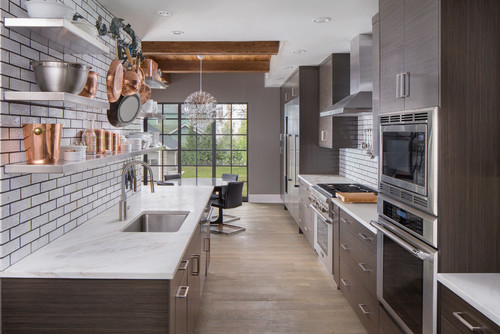
For a painted kitchen cabinet, High-Density Fiberboard (HDF) is the industry gold standard. It is denser than solid wood and much smoother. This smoothness allows for a flawless paint application that looks like a factory finish rather than a brush-painted project.
Because HDF is so stable, it prevents the joint separation issues described earlier. Your painted kitchen cabinet will remain seamless and crack-free, even during the humid dog days of summer. This addresses the core reason why solid wood often fails in humid environments regarding painted finishes.
4.2. Plywood Cabinet Boxes
While the doors are the face of the kitchen, the box is the backbone. We advocate for the use of high-quality plywood for the kitchen cabinet box construction. Unlike particleboard, which can swell irrecoverably if it gets wet from a plumbing leak, plywood uses cross-laminated layers to lock in stability.
This construction method resists swelling problems. Plywood is dimensionally stable, meaning your kitchen cabinet box will remain square and true, ensuring that doors and drawers continue to operate smoothly for the life of the kitchen.
4.3. Advanced Finishing Technologies
The finish on a kitchen cabinet is its first line of defense against moisture. Our cabinetry utilizes advanced curing processes and high-quality industrial coatings that act as a barrier against water vapor.
Whether you choose a stained look or a solid color, these finishes are tested to withstand the rigors of a kitchen environment. This minimizes the maintenance challenges usually associated with a wood kitchen cabinet in high humidity.
5. Navigating the Market: RTA, Premade, and Custom
When shopping for a kitchen cabinet in Canada, homeowners are bombarded with options ranging from flat-pack boxes to fully custom millwork. Understanding the terminology helps you find the best value.
5.1. The Rise of RTA (Ready-To-Assemble)
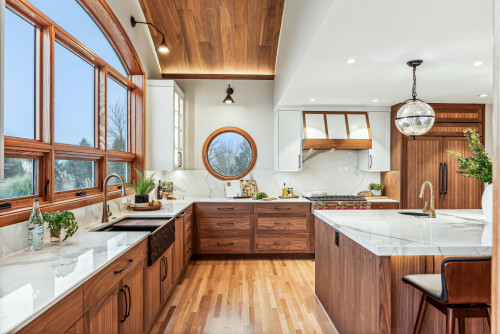
RTA cabinets have revolutionized the industry. By shipping the product flat, suppliers save on shipping and assembly costs, passing those savings to you. However, quality varies wildly. You might see a search term like rti cabinet when looking for these options; this is often a typo for RTA or refers to “Ready to Install” variations.
Regardless of the acronym, the key is to look for RTA cabinets that use the same high-quality materials—plywood boxes and HDF or solid hardwood frames—as custom options. A high-quality RTA kitchen cabinet can last just as long as a pre-assembled one if the materials are sound.
5.2. Premade and Stock Cabinets
A premade cabinet offers convenience for those who need a quick turnaround. These are assembled at the factory and shipped ready to install. While convenient, you must be careful to check the specifications. Many stock options use lower-grade particle board to keep costs down.
If you choose a premade kitchen cabinet, ensure that the back panel is sturdy and that the shelves are adjustable and full-depth. In a humid climate, a weak particle board back can sag and absorb moisture from the wall, leading to mold issues.
5.3. Comparing with Major Retailers
Many homeowners consider an ikea cabinet for their starter home or basement renovation. These are widely available and stylish. However, they typically utilize particle board and MDF blends that may not be as resistant to high humidity as plywood.
While an ikea cabinet is a valid choice for a budget-conscious project, you should be aware of the potential for water damage, particularly near sinks and dishwashers. Upgrading to a solid plywood box from a specialized supplier often provides better long-term value for a primary residence.
5.4. Refacing and Door Replacement
Another trend is refacing existing boxes. Brands like nieu cabinet doors have popularized the idea of keeping your old boxes and just buying new fronts. This can be a great option if your existing kitchen cabinet boxes are in excellent condition.
However, if your current boxes are cheap melamine that is peeling or warping, putting expensive new doors on them is a bad investment. You need a solid foundation. If your boxes are compromised by humidity, you need to replace the entire kitchen cabinet unit.
6. Cost vs. Value: Budgeting for Your Renovation
Renovating a kitchen is a significant financial undertaking. It is tempting to cut corners to save money, but cabinetry is a permanent fixture. You don’t want to have to live on cheap rice for the next five years just to afford your kitchen, but you also shouldn’t buy the most expensive option if a mid-range one performs better.
6.1. The “Cheap Rice” Metaphor in Construction
There is a saying in the industry about not starving your lifestyle to feed your house. However, there is a balance. If you buy the cheapest possible kitchen cabinet, you may end up paying for it twice—once to install it, and again to replace it when it fails in three years.
Conversely, spending your entire savings on custom solid wood that warps in your climate is also a waste. The goal is to find the “sweet spot”—high-value materials like plywood and HDF that offer durability at a fair price. You shouldn’t have to survive on cheap rice to afford a luxury look; you just need to choose smart materials.
6.2. Long-Term Investment
A durable kitchen cabinet adds value to your home. Potential buyers in Canada are savvy; they look for soft-close hinges, sturdy drawers, and finishes that look fresh. A kitchen that smells musty or has peeling doors due to humidity will lower your property value.
Investing in moisture-resistant materials is an investment in your home’s equity. When you sell, a kitchen cabinet that looks as good as the day it was installed speaks volumes about the maintenance of the home.
7. Selecting the Best Kitchen Supplier
Finding the best kitchen supplier in Canada involves more than just looking at the lowest price tag. You need a supplier who understands the local climate and offers products designed to withstand it.
7.1. What to Look For
A reputable supplier will be transparent about their materials. They should be able to tell you exactly what the core of the kitchen cabinet door is made of and what kind of plywood is used in the box. If they use vague terms like “wood composite,” ask for clarification.
They should also offer a warranty that covers the finish. Be wary of warranties that have exclusions for “environmental conditions” if you live in a humid area. The best kitchen supplier will stand behind their product because they know it is engineered to last.
7.2. Design Consultation Services
At rtadepot.ca, we invite you to utilize our design expertise. We help you navigate the choices between solid wood and engineered options based on your specific climate and lifestyle. Our team understands the nuances of identifying common problems with wood cabinets in damp climates and will steer you toward the most reliable products.
We can help you optimize your layout to ensure every kitchen cabinet is placed for maximum efficiency. Whether you are looking for a sleek modern aesthetic or a traditional farmhouse look, we can guide you to the materials that will maintain that look for years.
8. Optimizing Space and Organization
Many of our clients come to us because their current kitchen is cluttered and inefficient. Moving away from bulky solid wood construction allows for smarter, more space-efficient designs.
8.1. Maximizing Storage in Limited Areas
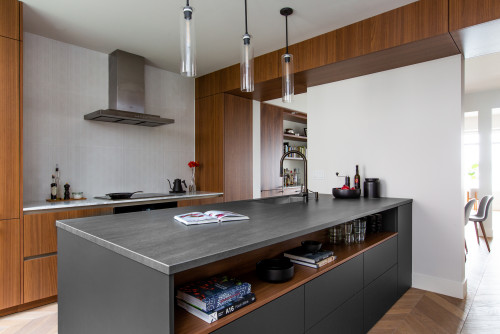
For city homes in Toronto or Vancouver with limited footage, every inch counts. Our RTA cabinets are designed with precision to maximize internal storage. By using stable materials, we can offer frameless or full-access construction styles that provide more usable drawer and shelf space compared to traditional bulky frames.
A frameless kitchen cabinet eliminates the center stile, allowing you to slide large platters and appliances directly onto the shelf without obstruction. This European style of construction is not only modern but highly practical for smaller Canadian kitchens.
8.2. Intelligent Organization Accessories
We integrate modern solutions like pull-out spice racks, corner lazy susans, and deep drawer organizers. These features help you maintain an organized lifestyle, ensuring that your beautiful new kitchen remains tidy and functional.
A well-organized kitchen cabinet reduces stress and creates a comfortable environment for your family. When every item has a dedicated place, maintaining the cleanliness of the kitchen becomes much easier.
9. Design Aesthetics and Personalization
Your kitchen should reflect your personal style. We believe that choosing durable materials does not mean sacrificing beauty.
9.1. Modern and Transitional Styles
We offer a wide range of designs that cater to modern tastes. From shaker style doors to sleek flat panels, our inventory is curated to upgrade the aesthetic of your home immediately. These styles are easier to clean and maintain, staying fresh and current for years to come.
The shaker style kitchen cabinet remains the most popular choice in Canada due to its versatility. It works in both traditional and contemporary homes. By using HDF for these doors, we ensure the rails and stiles remain perfectly square, preserving the crisp lines that define the style.
9.2. Custom Looks Without Custom Prices
One of the major pain points for homeowners is finding custom quality at a reasonable price. Our business model allows you to achieve a high-end, custom look using our extensive catalog of sizes and finishes.
You get the benefit of a tailored design that fits your specific room dimensions without the excessive cost of fully bespoke millwork. By utilizing standard sizes with custom fillers and panels, we can create a built-in look for your kitchen cabinet layout that mimics high-end custom carpentry.
10. Seamless Installation and Service
We understand that renovation can be daunting. Our goal is to make the process as smooth as possible, from selection to installation.
10.1. Easy Assembly for DIY Enthusiasts
Our cabinets are engineered for straightforward assembly. If you enjoy hands-on projects, our RTA systems come with clear instructions, allowing you to build your dream kitchen and save on labor costs.
The precision manufacturing ensures that parts fit together perfectly, avoiding the frustration of warped components. Installing a kitchen cabinet yourself can save you thousands of dollars, which you can then reinvest in higher quality appliances or countertops.
10.2. Acclimatization is Key
Even with engineered materials, it is best practice to let your new cabinetry acclimatize to your home’s environment before installation. We recommend leaving the kitchen cabinet boxes in the room where they will be installed for 48 to 72 hours.
This allows the materials to adjust to the temperature and humidity of your home, ensuring that they are stable when you begin the assembly process. This simple step can prevent minor settling issues down the road.
11. Professional Support Network
If you prefer professional help, we can guide you. We support our customers through the entire process. Our team at rtadepot.ca provides expert advice to ensure your installation goes smoothly.
We want you to feel confident that your investment is secure and installed correctly for long-term durability. Whether you are hiring a contractor or doing it yourself, having a support team that understands the specific assembly details of your kitchen cabinet is invaluable.
12. Conclusion
Do not let humidity compromise your dream kitchen. The fluctuating climate in Canada demands a smarter approach to cabinetry. By understanding the limitations of solid wood and embracing the stability of high-quality engineered materials like HDF and plywood, you can ensure your renovation stands the test of time.
Whether you are comparing a premade cabinet from a big box store or looking for a custom solution, always prioritize stability and moisture resistance. You don’t need to cut corners or live on cheap rice to afford a stunning kitchen; you simply need to choose the right materials for the job.
From the first design consultation to the final installation of the last kitchen cabinet, rtadepot.ca is here to help you create a sophisticated, organized, and lasting kitchen environment. Upgrade your home with cabinetry that blends style, durability, and intelligent design, and enjoy a beautiful kitchen that performs flawlessly in every season.
Ready to Transform Your Kitchen?
Contact rtadepot.ca today for a free design consultation.
- ✓ Call our Hotline: +1 888 973 5636
- ✓ Visit our Website: https://www.rtadepot.ca/

Sang Vi is a Senior Interior Designer and founder of Wedesign Interior Lab, as well as CEO of the Wedesign Interior Lab, MOC Concepts (Kitchen Cabinets), and Sang Vi Woodworking Manufacturer group. Since 2019, Sang has led an NKBA-certified team specializing in kitchen planning and cabinetry, completing dozens of projects each year across Toronto and other regions in Canada. With deep, hands-on experience in both custom millwork and ready-to-assemble (RTA) kitchen cabinets, Sang focuses on creating designs that are functional, durable, and easy to install. On this RTA platform, Sang shares practical, real-world insights to help homeowners choose, plan, and optimize their kitchen cabinet systems with confidence.