
Updated August 21, 2026. Reviewed for search intent, claim accuracy, internal links and current Canadian renovation planning.
Seven Ways to Build the Look
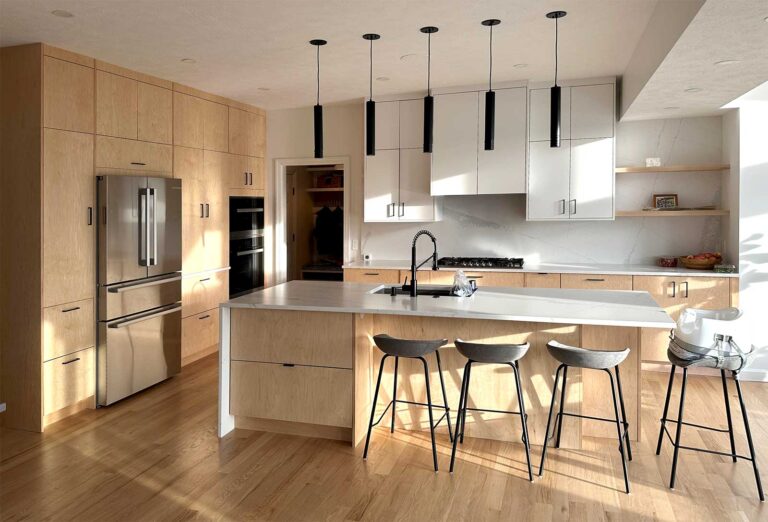
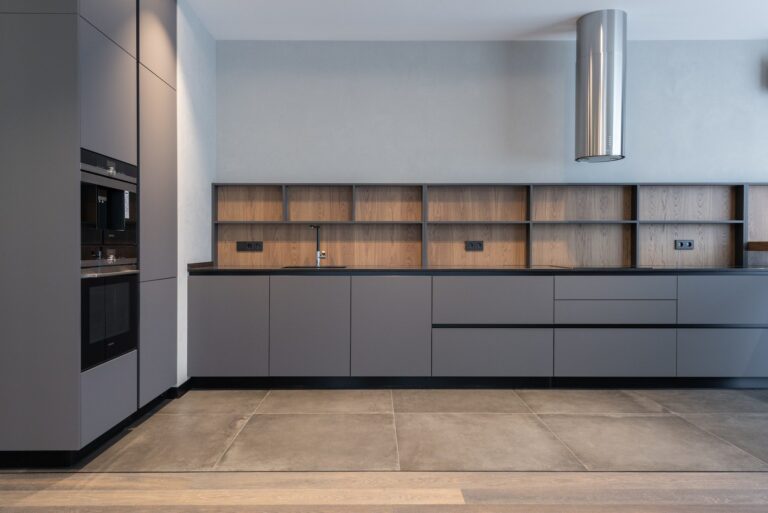
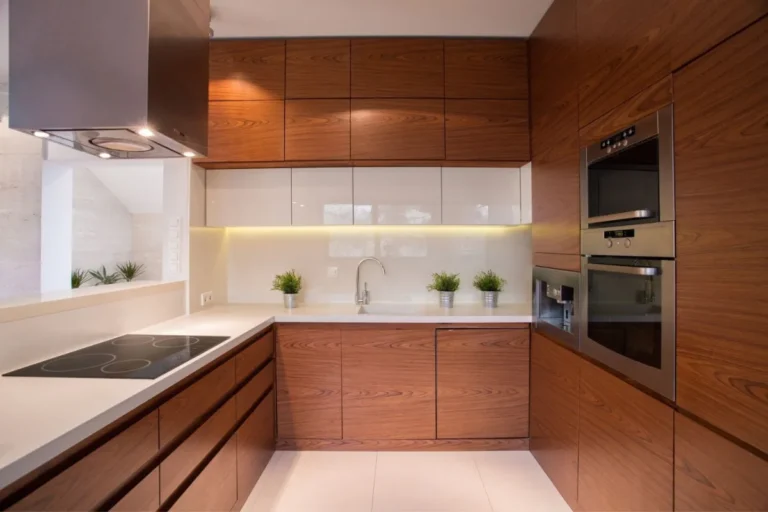
- Choose slab-front doors: flat faces establish the clean geometry associated with the period.
- Use walnut or a warm medium wood tone: specify grain direction and sample the finish beside flooring.
- Add tapered legs or a furniture-like element: use this on an island or selected base, not every cabinet.
- Keep hardware small and deliberate: slim bar pulls, knobs or integrated edge pulls should repeat consistently.
- Balance wood with muted colour: olive, ochre, cream, charcoal or restrained blue can work as accents.
- Use geometric detail outside the cabinet face: lighting, tile or shelving can carry the retro reference.
- Hide modern storage inside: wide drawers, pull-outs and organizers preserve clean exteriors.
Mid-Century Cabinet Decision Table
| Element | Good direction | Common mistake |
|---|---|---|
| Door | Flat slab with controlled reveals | Ornate raised panels |
| Wood | Walnut, teak-inspired or warm oak tone | Mixing several unrelated grains |
| Hardware | Small repeated pulls or edge hardware | Oversized decorative hardware on every front |
| Colour | Muted accent plus warm neutral | Using several saturated retro colours together |
| Storage | Modern drawers and hidden organizers | Sacrificing function for period styling |
Plan Grain Continuity
On slab doors, mismatched grain is easy to see. Ask whether fronts can be sequence-matched across drawer stacks or tall runs. If exact matching is unavailable, use smaller controlled veneer zones rather than promising a continuous pattern the product line cannot deliver.
Keep the Kitchen Livable
Mid-century style does not require vintage performance. Specify adjustable hinges, full-extension slides, task lighting and storage by work zone. The period reference should come from proportion, material and colour—not inefficient shelves or fragile hardware.
Connect the Style to the Rest of the Home
Use the modern style comparison to check whether the project is truly mid-century, Scandinavian or a blend. Return to the modern cabinet pillar for material and finish trade-offs.
Sources and planning references
The sources below document current renovation and cabinet-style direction. They are U.S./North American indicators, not a rule for every Canadian home.

Sang Vi is a Senior Interior Designer and founder of Wedesign Interior Lab, as well as CEO of the Wedesign Interior Lab, MOC Concepts (Kitchen Cabinets), and Sang Vi Woodworking Manufacturer group. Since 2019, Sang has led an NKBA-certified team specializing in kitchen planning and cabinetry, completing dozens of projects each year across Toronto and other regions in Canada. With deep, hands-on experience in both custom millwork and ready-to-assemble (RTA) kitchen cabinets, Sang focuses on creating designs that are functional, durable, and easy to install. On this RTA platform, Sang shares practical, real-world insights to help homeowners choose, plan, and optimize their kitchen cabinet systems with confidence