
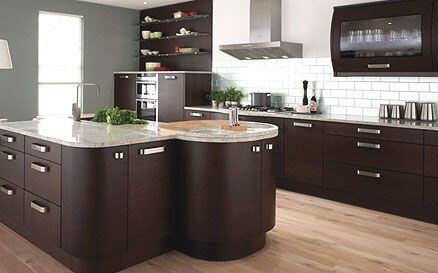
Best IKEA Kitchen Cabinets Alternatives: The Complete 2026 Canadian Homeowner Guide
Choosing the best IKEA kitchen cabinets alternatives is no longer just a luxury conversation. For many Canadian homeowners, it has become a practical decision about long-term durability, moisture resistance, cabinet box strength, and whether a kitchen renovation will still feel like a good investment five, ten, or even fifteen years later.
IKEA remains one of the most popular entry points in the market because it offers a clean modular system, accessible pricing, organized accessories, and a design language that works especially well in condos, rentals, and streamlined renovations. But once homeowners begin planning a kitchen for heavier daily use, a family home, an older property with imperfect walls, or a remodel tied to expensive countertops and appliances, they often start asking a different question: What is a better long-term alternative to IKEA kitchen cabinets?
That question usually leads to premium plywood RTA cabinets, semi-custom collections, or carefully selected custom options. The point is not that IKEA cannot work. The point is that different projects demand different levels of structure, finish, and flexibility. If you are still comparing IKEA as a system, start with our full IKEA kitchen cabinets review. Then use this guide to understand when it makes sense to stay with IKEA and when it makes more sense to move toward a stronger alternative.
Article focus: This guide explains the best alternatives to IKEA kitchen cabinets by comparing materials, durability, design flexibility, installation complexity, budget range, and the kinds of homes where each option makes the most sense.
1. Why Homeowners Look for IKEA Kitchen Cabinets Alternatives
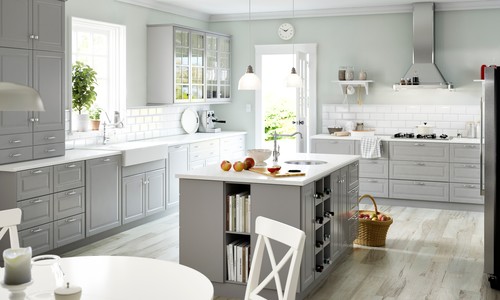
Most homeowners do not search for alternatives because they believe IKEA is low quality across the board. In reality, the search usually begins when project priorities change. A condo renovation, rental refresh, or first-home remodel often rewards IKEA’s lower entry price and modular planning system. A forever home or a busy family kitchen raises different concerns. Homeowners start thinking about how much weight drawers will carry, how the sink base will age, whether the cabinet box will tolerate moisture over time, and whether the finished room will still feel strong and refined years after installation.
Another reason this topic matters is that cabinets are not just a decorative element. They form the structural backbone of the kitchen. Countertops, sinks, cooktops, hardware, and storage loads all depend on what is underneath. When a homeowner invests in stone surfaces, better appliances, or a major layout change, the idea of pairing all of that with a cabinet box that feels merely “good enough” becomes harder to justify. That is often the moment when the search shifts from “How much does IKEA cost?” to “What gives me better value over the long run?”
There is also the issue of fit. IKEA works best when the room suits a modular system. Many kitchens do, but not all of them. Older homes often have uneven walls, out-of-square corners, and floor variation that make a standardized layout harder to finish cleanly. Homeowners in that situation often begin comparing Flat Pack Kitchen Cabinet options, better-finished premium RTA lines, or even more tailored solutions such as RTA vs custom cabinets.
In other words, alternatives become relevant when the homeowner wants one or more of the following: stronger structural materials, better moisture tolerance, a more custom-looking final fit, greater long-term confidence, or a renovation result that feels more permanent than a budget-driven modular compromise. That is why this is not really a conversation about brand loyalty. It is a conversation about choosing the right cabinet system for the actual life of the home.
2. What Should You Look for in a Good IKEA Kitchen Cabinet Alternative?
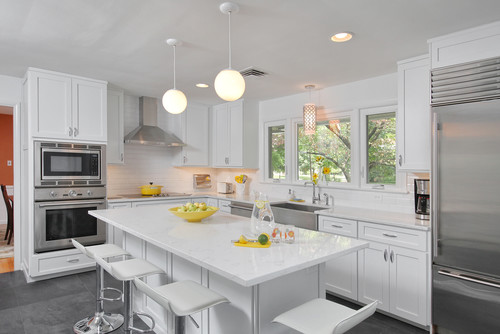
Short answer: The best IKEA kitchen cabinets alternatives usually stand out in cabinet box material, moisture resistance, joinery strength, hardware quality, and real installed value, not just in door style or surface appearance.
Many shoppers compare only the finish. They look at whether the door is shaker or slab, white or wood tone, matte or glossy. Those choices matter visually, but they do not tell you enough about how the kitchen will hold up. The real comparison begins with the cabinet box. The box carries the countertop, anchors the hinges and drawer slides, absorbs the daily stress of opening and closing, and takes the first hit if a plumbing issue or moisture problem appears under the sink or around appliances.
A strong alternative to IKEA usually checks five boxes. First, it uses a stronger box material, often plywood instead of a particleboard-based core. Second, it provides dependable drawer and hinge performance, because hardware failure makes even a beautiful kitchen feel cheap. Third, it handles moisture more confidently in real-world kitchens where steam, drips, sink splashes, and dishwasher humidity are part of daily life. Fourth, it allows a cleaner finished look with fewer compromises in fillers, panels, and layout adjustments. Fifth, it still lands within a price tier that makes sense relative to the value of the home and the scope of the renovation.
The best alternatives also feel balanced. A cabinet line that offers thicker plywood but weak hardware is not necessarily a better solution. A product that looks gorgeous online but lacks planning support, finishing parts, or consistent sizing may create new problems instead of solving the old ones. Homeowners should compare the full system: cabinet box, door finish, hardware, accessory options, installation method, and the supplier’s ability to support the project before and after delivery.
This is why the most effective comparison is not simply “IKEA vs expensive cabinets.” The better comparison is “IKEA vs the right next step.” For some homes that next step is premium RTA. For others it is a semi-custom line. For a smaller group, especially in architecturally unusual spaces, the right answer is full custom. The goal is not to spend the most. The goal is to buy the level of cabinet that matches the life of the room.
3. Premium RTA Cabinets vs IKEA Cabinets
When homeowners search for the best alternative to IKEA kitchen cabinets, the discussion usually leads to premium RTA. That is because premium RTA occupies a useful middle ground. It gives homeowners a better structural package than a basic retail modular system while staying more affordable than fully custom millwork. For many kitchens, especially in Canada, that middle ground is exactly where the smartest renovation value lives.
IKEA often wins on accessibility. It has a familiar planning ecosystem, a wide range of internal organizers, and a modular logic that works well in straightforward spaces. Premium RTA often wins where the box itself matters more. It usually offers better material thickness, stronger screw-holding strength, improved joinery, and a more substantial feel once the room is fully assembled and trimmed out. That difference may not always be obvious in a showroom photo, but it becomes much more important in the daily life of the kitchen.
Premium RTA is also appealing because it often looks like a bigger upgrade than its price jump suggests. A well-chosen premium line can provide a cleaner built-in look, a more refined finish package, and a stronger sense of permanence without forcing the homeowner into a fully custom budget. That is why so many buyers who begin with IKEA eventually decide that premium RTA is the better long-term answer.
3.1. Plywood vs Particleboard: Why the Box Matters
This is usually the first and most important structural comparison. Particleboard can perform well when it is kept dry, installed correctly, and used within a system that protects its edges and attachment points. That is one reason IKEA still works for many homeowners. But plywood is more forgiving. It tends to hold screws better, resists edge fatigue better over time, and gives more confidence in a kitchen that sees heavy daily use.
The practical meaning of that difference becomes clear around sink bases, dishwasher openings, pantry sections, and drawers loaded with cookware. These are not rare edge cases. They are common stress points in real homes. A stronger plywood cabinet box offers psychological confidence as much as structural benefit. Homeowners feel better about investing in countertops, appliances, and full-room design when the cabinet frame beneath everything feels more robust.
3.2. Hardware, Drawers, and Everyday Use
A fair comparison has to acknowledge that IKEA performs well in hardware for the price. Smooth drawer action, soft-close features, and accessible internal accessories are part of the system’s appeal. This is why the right alternative should not only improve the cabinet box. It should also meet or exceed that level of everyday convenience.
Good premium RTA lines do exactly that. They pair stronger boxes with dependable slides, quality hinges, and drawer construction designed to tolerate long-term alignment and repeated daily use. A kitchen only feels premium if it performs smoothly every day, not just if it photographs well on installation day.
3.3. Moisture Resistance and Long-Term Confidence
Real kitchens are wet places. Steam, leaks, spills, mop water, dishwasher humidity, and sink drips are normal. Better moisture management is one of the biggest reasons homeowners begin researching alternatives to IKEA kitchen cabinets. Even when a modular cabinet system works well on paper, the homeowner may still want a more forgiving box material for the areas that see the most stress.
This does not mean every IKEA kitchen will fail. It means some homeowners simply want more margin for error. In a long-term family kitchen, that added margin matters. It changes how confidently people use the space and how comfortable they feel about the renovation as a whole.
3.4. Installed Look and Perceived Value
Premium RTA often shines after installation, when fillers, end panels, appliance panels, trim decisions, and alignment details come together. A kitchen that begins as a cabinet-box decision often becomes a finish decision by the time the room is complete. Premium RTA can create a more tailored result because the entire package tends to be selected with a higher-end final appearance in mind.
4. RTA Kitchen Cabinets vs IKEA Kitchen Cabinets for Different Home Types
The best cabinet alternative depends heavily on the type of home and the constraints of the project. In downtown condos, modular and flat-pack systems still have major advantages. They are easier to move through elevators and narrow hallways, easier to stage in smaller spaces, and often a practical match for compact layouts. In those situations, IKEA or another Flat Pack Kitchen Cabinet system can remain a sensible choice.
Townhouses and suburban family homes create different priorities. Homeowners in these spaces usually care more about pantry capacity, island storage, the weight of dishes and cookware, and the constant traffic that family kitchens experience. Here, premium RTA often begins to outperform IKEA in the ways that matter most. It preserves much of the convenience of flat-pack cabinetry while improving the actual structure.
Older homes are their own category. Uneven walls, inconsistent floor levels, odd openings, and corners that are not truly square can make modular planning much harder. This is where semi-custom and custom options often have a natural advantage. However, premium RTA can still be a strong alternative when paired with careful planning, correct fillers, and a supplier that understands how to support tricky layouts. That is one reason it helps to compare Kitchen Suppliers and not simply compare sticker prices.
In short, there is no single best cabinet for every home. Condo projects often reward modular simplicity. Family homes often justify stronger RTA construction. Older homes more often reward flexibility and tailored planning. The right choice comes from matching the cabinet system to the property itself, not just to a showroom price tag.
5. Which IKEA Kitchen Cabinet Alternative Makes Sense for Different Budgets?
Short answer: Entry budgets usually favor IKEA or other modular systems. Mid-range budgets often get the strongest value from premium plywood RTA. Higher budgets begin to justify semi-custom or full custom when architectural fit, detailing, and finish quality move to the top of the priority list.
Budget is where many homeowners make the wrong comparison. They compare only the starting cabinet price and ignore the cost of panels, fillers, delivery, installation time, adjustments, and the long-term effect of material quality. But kitchens are not bought only at the checkout stage. They are lived with. The better question is which option gives the best value after the room is fully installed and used for years.
At the lower end of the market, IKEA remains attractive because it gets the project moving. It can be especially sensible in a rental, a condo resale project, or a smaller kitchen where the homeowner wants a clean look without overcommitting financially. In the mid-range, premium RTA becomes very compelling because it improves the cabinet box without forcing the homeowner into a custom-only budget. At the higher end, semi-custom and custom make more sense when the room has unusual dimensions or the homeowner wants a more architecturally tailored finish.
| Budget Level | Best-Fit Option | Why It Makes Sense |
|---|---|---|
| Entry budget | IKEA or other modular systems | Best for simpler projects where the goal is a clean design and controlled upfront cost. |
| Mid-range budget | Premium plywood RTA | Often the strongest value tier for better structure, better finish, and stronger long-term confidence. |
| Higher budget | Semi-custom or full custom | Best when unusual dimensions, premium detailing, and precision fitting are the main goals. |
This is why premium RTA is so often the sweet spot. It answers the most common upgrade concerns without turning the project into a fully bespoke exercise. It gives homeowners something more substantial than retail modular cabinetry while still respecting the financial reality of a full kitchen renovation. For many homes, especially in Canada, that balance is exactly what makes it the most practical alternative to IKEA.
6. Design Flexibility, Finishes, and the Custom-Look Advantage
Not every buyer moves away from IKEA because of structure alone. Many homeowners are also chasing a different look. They want more finish depth, more tailored proportions, better end panels, cleaner appliance integration, and a kitchen that feels less like a modular system once it is fully installed. In those situations, the visual upgrade matters just as much as the material upgrade.
This is where premium RTA often becomes especially attractive. It can provide shaker styles, slab doors, warm wood tones, painted finishes, and more polished trim details while improving the box underneath. The result is not just a stronger kitchen, but a more convincing one. It looks less pieced together and more intentionally designed.
The key idea here is that a polished room is rarely created by the cabinet door alone. It is created by the full finishing package. Fillers, end panels, toe kicks, appliance panels, crown details where applicable, and careful alignment decisions are what separate a basic installation from a room that feels built in. If your goal is value plus design quality, compare not only cabinet boxes but the full system around them, including Premade kitchen cabinet options, finishing parts, and full-category planning at RTA Depot’s project landing page.
This is also why some homeowners who begin by searching for a Low Price Kitchen Cabinet eventually move slightly upward in budget. Once they see how much the total room depends on finish quality and final visual integration, a modest increase in cabinet quality can feel like a much smarter investment than saving at the box stage alone.
7. Installation, Planning, and Time Commitment
Short answer: Installation is one of the biggest hidden costs in any cabinet decision. A lower purchase price does not automatically mean a lower finished cost once assembly time, alignment work, fillers, trimming, and corrections are included.
This is one of the most overlooked parts of the IKEA versus alternative discussion. IKEA is often described as DIY-friendly, and in many cases it is. But a full kitchen still demands careful measurement, leveling, suspension alignment, precise filler planning, appliance spacing, and patient final adjustments. That labor matters whether the homeowner does it personally or pays someone else to do it.
Premium RTA does not remove the need for good planning, but many homeowners feel more comfortable investing time and labor into a cabinet system when the finished box is stronger and the end result feels more permanent. That emotional factor is real. People are more willing to invest labor into a room when they believe the structural foundation justifies the effort.
Accurate planning is non-negotiable regardless of the cabinet choice. Measure every wall more than once. Check floor level and ceiling variation. Mark plumbing, vents, windows, electrical locations, and appliance dimensions before finalizing the plan. In older homes, never assume the room is square simply because the existing kitchen appears to fit. Small layout errors compound quickly in cabinetry.
- Measure each wall at multiple heights and verify where the room is out of square.
- Confirm appliance dimensions before finalizing cabinet widths, fillers, and panel needs.
- Budget for trim pieces, end panels, and installation adjustments, not only the cabinet boxes.
- Choose the cabinet system that matches how long you plan to live with the kitchen.
Many renovation disappointments do not come from bad cabinets. They come from rushed planning. That is why a design review or layout consultation often saves far more money than it costs. The better the room is planned, the clearer the difference becomes between a purely budget-driven modular system and a more refined cabinet alternative.
8. Premium RTA Alternatives and How to Compare Suppliers
For many Canadian homeowners, the real alternative to IKEA is not to jump straight into full custom. It is to step up into premium RTA. That category offers a stronger cabinet box, a more confident finish package, and better long-term use without automatically sending the project into luxury-only pricing. In many cases, that is exactly the balance homeowners are looking for.
The supplier matters almost as much as the cabinet itself. A good supplier helps you compare door styles, box construction, fillers, trim needs, appliance integration, and layout realities before problems appear. A weak supplier sells a product list. A strong supplier helps create a workable kitchen. That is why it is worth reviewing Kitchen Suppliers, construction options, and RTA vs custom cabinets side by side instead of assuming all ready-to-assemble products are equal.
Specialized suppliers such as rtadepot.ca position premium RTA as the bridge between entry-level modular cabinets and more tailored millwork. That bridge matters because it gives homeowners access to a better cabinet without requiring them to redesign the financial structure of the whole renovation.
When comparing suppliers, ask practical questions. What is the cabinet box made from? How complete is the finishing package? Are matching panels and trim readily available? How well does the supplier support older homes or more complicated layouts? Can they help you avoid common planning errors? Those answers matter far more than a single advertised price point.
9. Final Verdict: Which Alternative Makes the Most Sense?
The best IKEA kitchen cabinets alternative depends on what you want to improve most. If the main goal is controlling the upfront budget, keeping the design modern, and finishing a condo or rental project efficiently, IKEA still has a strong place in the market. It gives many homeowners a practical path to a clean, functional kitchen without crossing into a high-investment category.
If the main goal is stronger cabinet box construction, better moisture confidence, more polished finishing potential, and a kitchen that feels more permanent, premium RTA is usually the best upgrade path. It solves the most common reasons people begin searching for alternatives to IKEA without forcing them immediately into full custom spending.
Semi-custom and custom still have their place. They make the most sense when the room itself demands a more tailored approach, whether because of architecture, dimensions, or design ambition. But for the majority of homeowners comparing cost, structure, performance, and appearance together, premium plywood RTA usually lands in the smartest middle ground.
The simplest way to think about the decision is this: IKEA is often the best value starter system, premium RTA is often the best value upgrade, and semi-custom or custom is the right answer when the room truly demands a higher level of tailoring. Once you frame the choice that way, the best path becomes much easier to see.
ELEVATE YOUR KITCHEN WITH THE RIGHT CABINET SYSTEM
Start with our full IKEA kitchen cabinets review, then explore better-quality options through Choose Your Project, compare trusted Kitchen Suppliers, and browse practical Flat Pack Kitchen Cabinet upgrade paths.
Call Us: +1 888 973 5636