
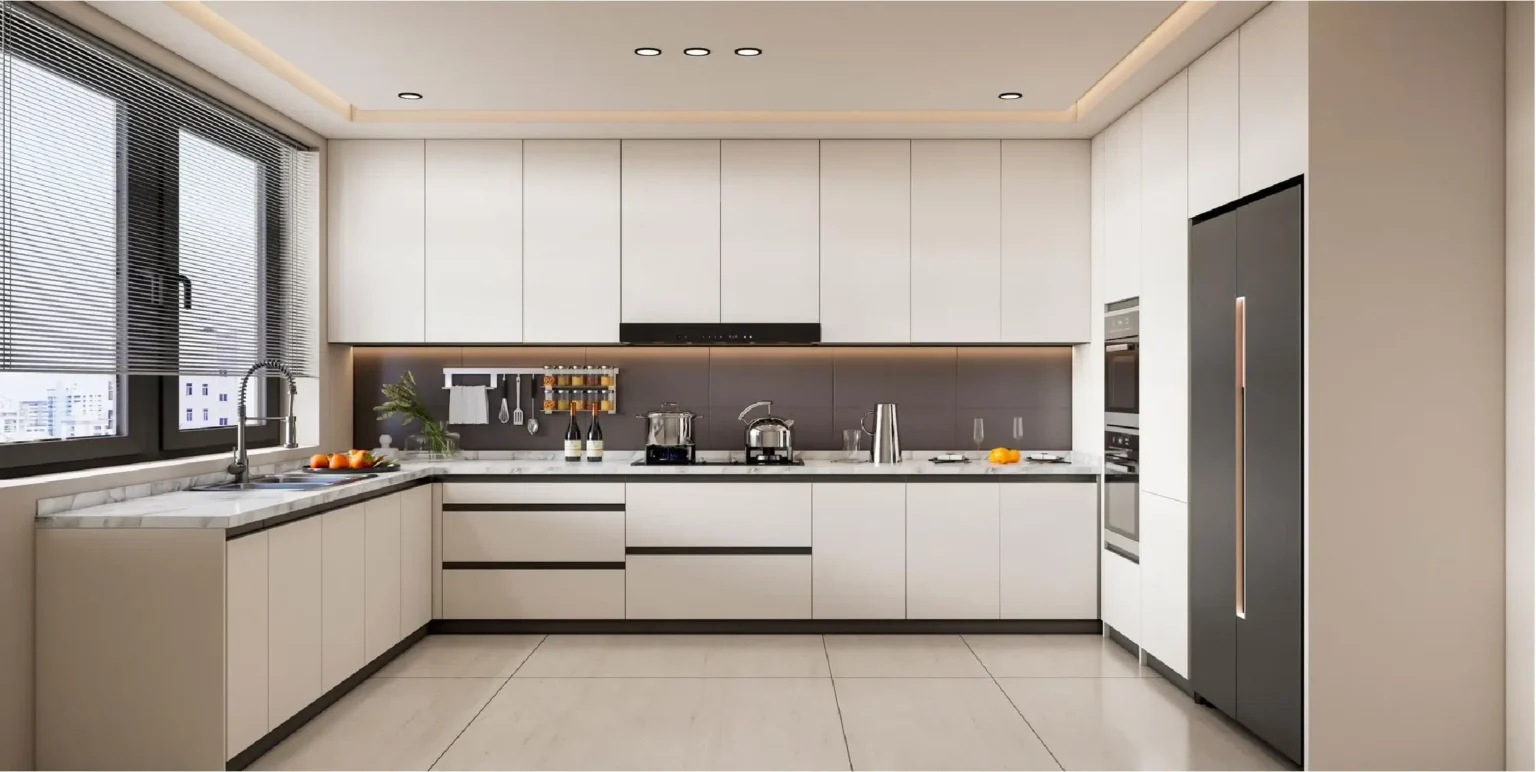
The Definitive Guide to IKEA Kitchen Cabinets: A 2026 Deep Dive into Quality, Cost, and Design
In the ever-evolving world of residential architecture and home renovation, few products have sparked as much debate, loyalty, and transformation as IKEA kitchen cabinets. Once viewed as a “budget fix” for starter homes or basement suites, the Swedish giant’s cabinetry system has matured into a global design standard in 2026. For millions of homeowners—from the high-density condos of Toronto to the sprawling suburbs of Mississauga – IKEA represents the most viable path to a high-end, European-inspired kitchen without a six-figure price tag.
But as we navigate the modern renovation landscape, the central question remains: Is the SEKTION system a legitimate long-term investment for a “forever home,” or merely a temporary aesthetic triumph? In an era where sustainability and modularity are at the forefront of interior design, IKEA kitchen cabinets have adapted to meet the demands of high-tech households and eco-conscious consumers alike. This guide serves as an exhaustive analysis of the IKEA ecosystem, exploring technical engineering, a granular breakdown of quality, and a transparent comparison of costs against professional alternatives.
1. The Architecture of SEKTION: A Modular Revolution
To understand why IKEA dominates the market, one must first understand the SEKTION framework. Launched to replace the older Akurum line, SEKTION is a “frameless” (European-style) modular system. Unlike traditional North American “face-frame” cabinets – where a decorative wood frame is attached to the front of the box – frameless cabinets attach the doors directly to the cabinet sides. This subtle engineering shift is what allows IKEA kitchen cabinets to achieve their signature clean, minimalist aesthetic while maximizing storage capacity.
The Frameless Advantage
The shift toward frameless design isn’t just about looks; it’s about mechanical efficiency. By 2026, as urban living spaces continue to shrink in markets like the GTA, the efficiency of IKEA kitchen cabinets has become their greatest selling point.
- Increased Storage Volume: By removing the face frame, you gain roughly 10% to 15% more usable interior space. In a standard 10×10 kitchen, this can equate to an entire extra cabinet’s worth of room.
- Full Access: There is no center stile blocking the opening, making it significantly easier to store oversized stand mixers, large Dutch ovens, or wide baking sheets that typically frustrate owners of traditional cabinetry.
- Sleek Gaps: Modern design demands tight tolerances. SEKTION allows for uniform 1/8-inch gaps between doors, creating a monolithic, “hidden” look that is the hallmark of luxury high-end millwork.
Standard Dimensions and the 3-Inch Logic
IKEA’s system operates on a grid-based logic using 3-inch increments. This standardization is the secret to their massive production volume and lower price points. Understanding these fixed parameters is the first step in successful planning for IKEA kitchen cabinets:
- Base Cabinets: 24 inches deep and 30 inches high. When placed on the standard 4.5-inch legs, they reach a standard counter height of 34.5 inches. Widths vary from 12 to 36 inches, allowing for a near-custom fit when paired with filler strips.
- Wall Cabinets: While most North American brands offer 12-inch deep wall units, IKEA provides 15-inch depths. This extra 3 inches is a game-changer, allowing you to store full-sized dinner plates and large serving bowls that typically won’t fit in standard cabinetry.
- Tall (Pantry) Cabinets: Standing at 80 or 90 inches, these units act as the “towers” of the kitchen, often housing integrated refrigerators or stacked oven/microwave combinations, creating a seamless wall of storage.
2. Aesthetics: Door Styles, Colors, and 2026 Trends
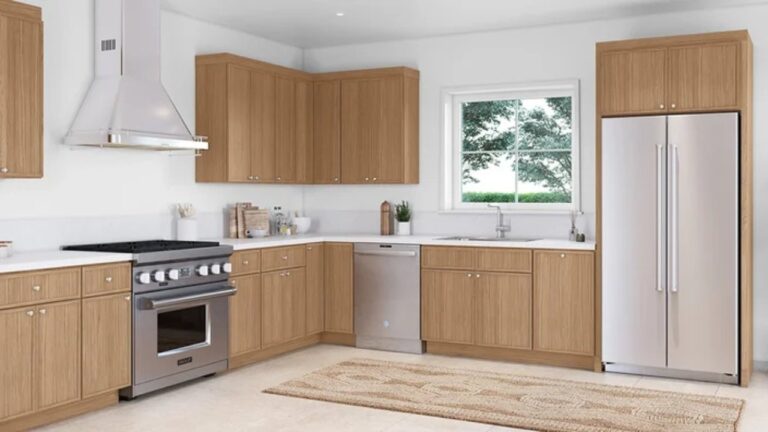
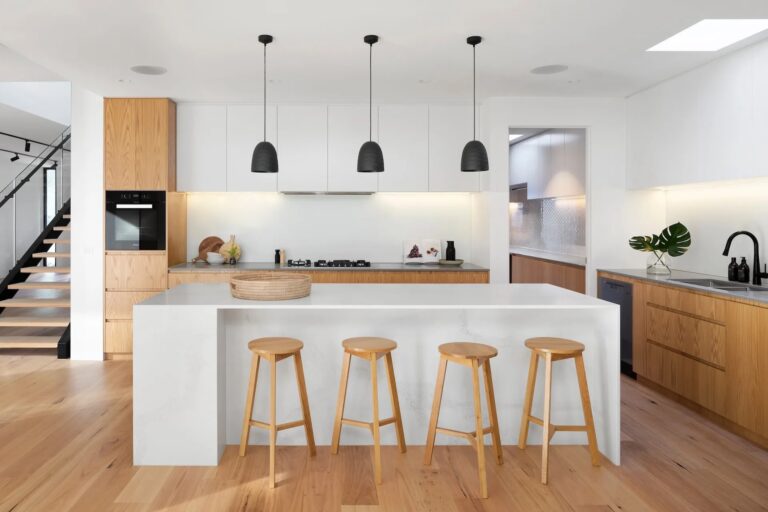
In 2026, the aesthetic focus has moved away from “stark white minimalism” toward “textured biophilia” and “moody earth tones.” Homeowners are increasingly looking for IKEA kitchen cabinets that feel warm and organic rather than clinical. IKEA’s door fronts have evolved to mimic the textures of bespoke millwork, using advanced laminate and veneer technologies.
The Modernists: Clean Lines and High Tech
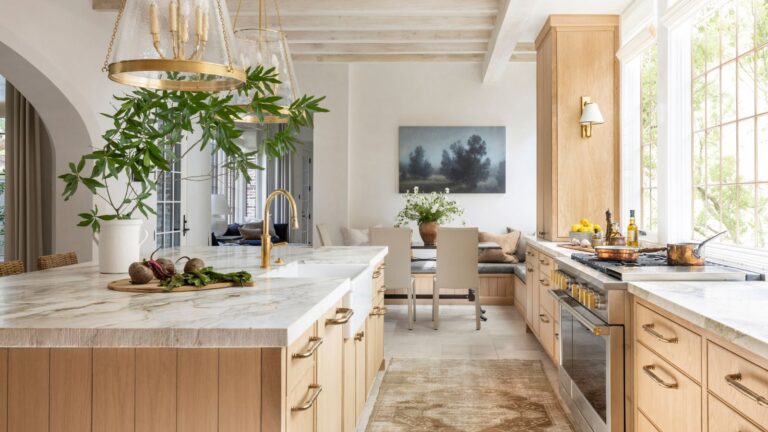
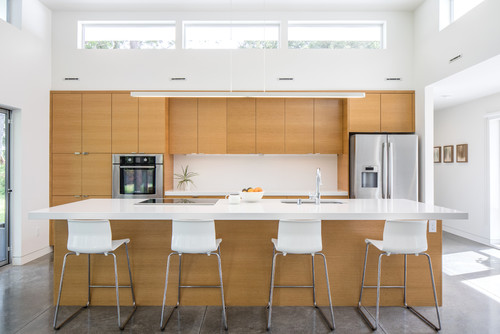 Photo by The Artisans Group, Inc. – Search kitchen pictures
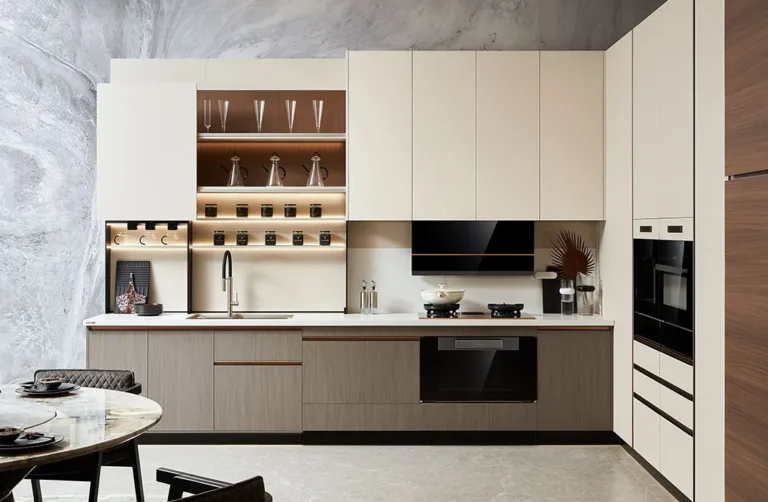
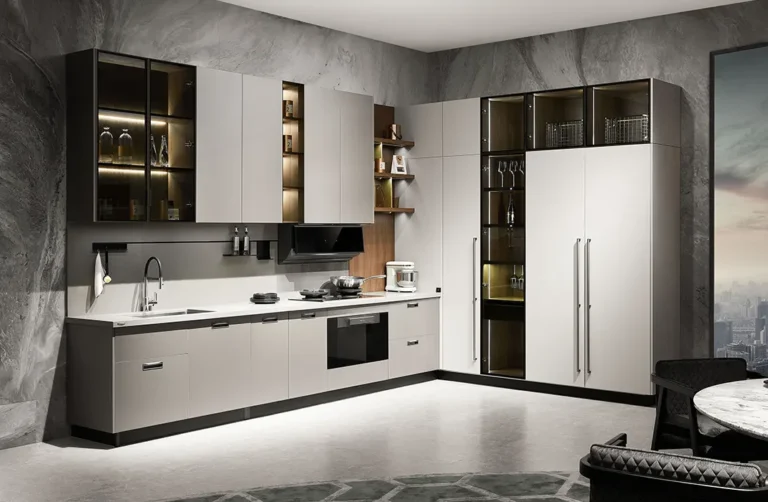
- VOXTORP: Featuring integrated “J-pull” handles, VOXTORP remains the gold standard for handle-less kitchens. It creates a seamless visual flow that is nearly impossible to achieve at this price point elsewhere. In 2026, the matte dark gray and walnut finishes are the top sellers for luxury condos.
- RINGHULT: The classic high-gloss finish. In smaller urban spaces like downtown Toronto, RINGHULT’s reflective surface bounces light, making a tiny galley kitchen feel expansive and airy.
- KUNGSBACKA: A testament to IKEA’s sustainability goals, these doors are made from recycled wood and recycled PET plastic bottles. Its matte black finish has become a favorite for industrial-modern aesthetics.
The Classics: Shaker and Traditional Profiles
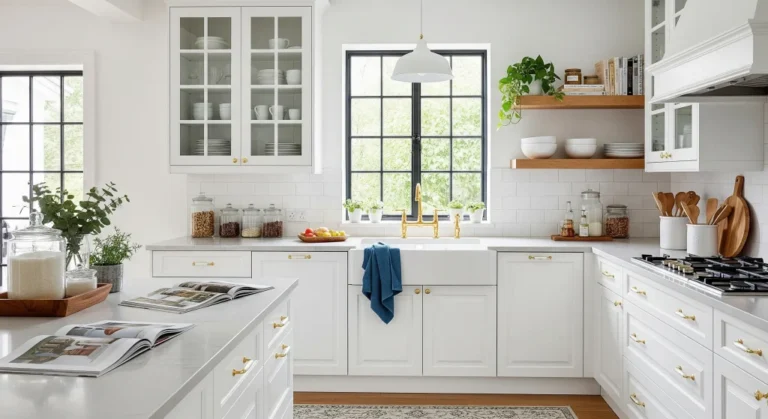
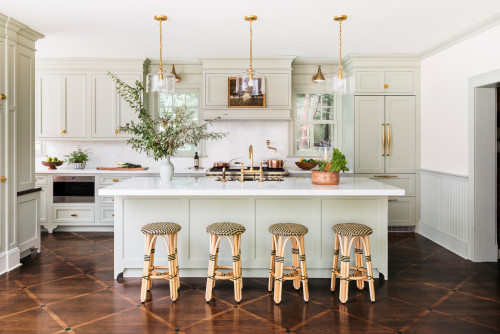 Photo by Bilotta Kitchen & Home – Look for kitchen pictures
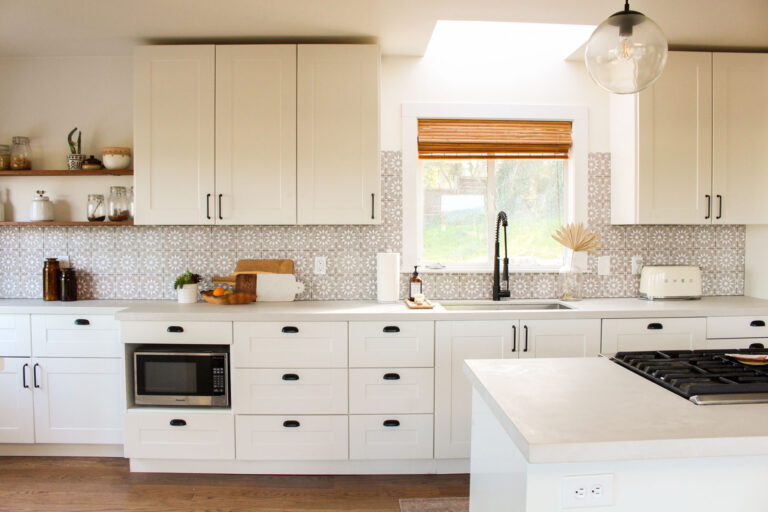
- AXSTAD: Currently the most popular choice for “transitional” kitchens. Its matte Shaker-style profile is fingerprint-resistant and looks equally at home in a historic farmhouse or a modern suburban build in Mississauga.
- BODBYN: For those who prefer the “traditional” look, BODBYN offers a raised-panel design in off-white and gray, evoking a timeless, cozy feel that pairs perfectly with marble-effect quartz countertops.
The “IKEA Hack” and Third-Party Doors
A significant factor in the system’s popularity is the thriving “aftermarket” industry. This is perhaps the most strategic way to utilize IKEA kitchen cabinets. Homeowners can purchase the “bones” (the SEKTION boxes and Blum hardware) from IKEA and then buy custom-painted or solid wood door fronts from companies like Semihandmade, Reform, or Kokeena. This “Hybrid Kitchen” approach allows you to achieve a $60,000 custom look for approximately $18,000, blending the efficiency of mass production with the soul of custom craftsmanship.
3. Technical Deep Dive: Material Science & Quality
One of the most debated topics among contractors is IKEA kitchen cabinets quality. To evaluate this objectively, we must break the product down into its core components and compare them to the industry “standard” plywood construction.
The Truth About Particleboard
IKEA cabinet boxes are made of 18mm furniture-grade particleboard finished with a melamine foil. While “particleboard” often carries a negative connotation, the reality in 2026 is much more nuanced.
- Stability: Unlike solid wood or even some plywood, high-density particleboard is dimensionally stable. It will not warp, cup, or expand significantly when the seasons change. This is crucial for the humid summers and dry winters of Ontario, where solid wood doors often “stick” in January.
- The Moisture Myth: While particleboard is often maligned, the modern melamine wrap is highly effective at sealing the core. However, the raw edges (where the board is cut) are the danger zones. If a sink leak occurs and water sits on an unsealed edge, the fibers will swell, leading to irreparable damage.
Expert Tip: During installation of IKEA kitchen cabinets, pros always apply a bead of silicone or specialized waterproof sealant to the raw edges around the sink cut-out to create a permanent water barrier. This $10 step can add 10 years to the life of your kitchen.
Formaldehyde and Safety Standards
In 2026, indoor air quality is a top concern for homeowners. IKEA’s cabinetry meets or exceeds CARB P2 and TSCA Title VI standards. These regulations ensure that formaldehyde emissions are kept to an absolute minimum—often lower than the natural wood products found in some uncertified boutique shops. For families with children or those sensitive to VOCs, IKEA kitchen cabinets are among the safest mass-produced options on the market.
4. The Hardware: The Blum Strategic Partnership
If the box is the body of the kitchen, the hardware is the soul. This is where IKEA kitchen cabinets arguably beat almost every “Big Box” competitor. IKEA’s hardware (hinges, drawer slides, and soft-close pistons) is manufactured by Blum, an Austrian powerhouse in furniture engineering that typically supplies luxury custom brands.
MAXIMERA Drawer Systems
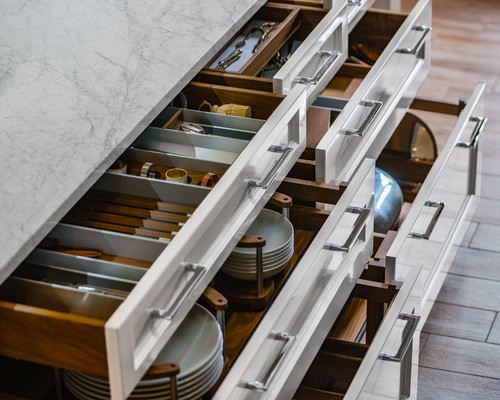
These aren’t your typical stapled-together wooden drawers. MAXIMERA uses double-walled steel sides with full-extension glides. The precision of these drawers is what gives IKEA kitchen cabinets their premium feel.
- Weight Capacity: Large 36-inch MAXIMERA drawers can hold up to 110 lbs of cast-iron pans without sagging. This outperforms many mid-range wooden drawer boxes.
- Smooth Motion: The integrated soft-close technology is buttery smooth. Blum hardware is rated for 200,000 cycles, meaning if you open your drawer 20 times a day, the hardware is engineered to last for over 27 years.
UTRUSTA Hinges
The snap-on hinges are a DIY dream. They offer three-way adjustment, allowing you to move the door up/down, left/right, and in/out. This precision is what allows a homeowner to achieve those perfectly straight “designer” lines during the final finishing phase. Even as the house settles, you can simply grab a screwdriver and realign your IKEA kitchen cabinets in minutes.
5. Smart Kitchen Integration: The 2026 Tech Suite
By 2026, the kitchen has become the “digital hearth” of the home. IKEA has leaned into this by integrating their DIRIGERA hub and Matter-compatible devices directly into the cabinetry. This makes IKEA kitchen cabinets a forward-thinking choice for the connected home.
MITTLED Intelligent Lighting
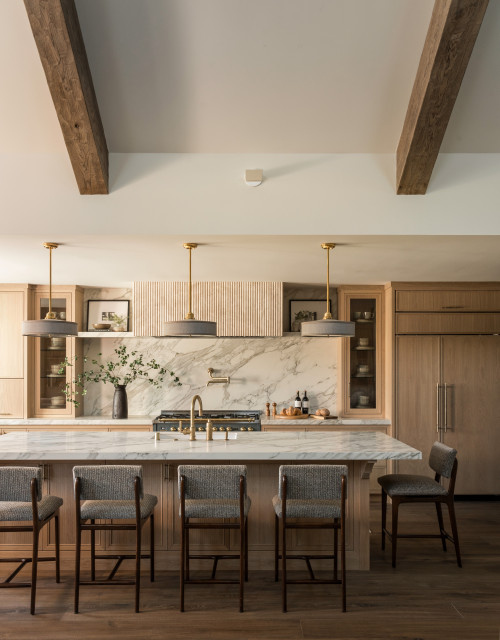
Lighting is no longer an afterthought. The MITTLED system is designed to be recessed into SEKTION cabinets, providing a look that used to require a professional electrician and custom routing.
- Circadian Lighting: Lights that shift from cool white in the morning to warm amber in the evening, aiding your body’s natural sleep-wake cycle.
- Task Efficiency: Integrated sensors that turn on cabinet lights only when the door is opened, saving energy and providing instant visibility.
- Voice Control: Seamless integration with Apple Home, Google Home, and Amazon Alexa. “Alexa, set the kitchen to dinner mode” is now a standard feature of IKEA kitchen cabinets.
Power Management: Modern IKEA kitchens in 2026 often incorporate hidden power strips and wireless charging pads routed directly into the 15-inch wall cabinets or the undersides of the base units, keeping countertops free of “cord clutter” and maintaining the minimalist vision.
6. Comprehensive 2026 Cost Breakdown
Budgeting for a renovation is the most stressful part of the process. Understanding IKEA kitchen cabinets cost requires a distinction between the “sticker price” of a box and the “Total Project Cost.” In 2026, while prices have adjusted for inflation, IKEA remains the price-to-performance leader.
Estimated Material Tiers (10′ x 10′ Kitchen)
| Tier | Representative Styles | Estimated Material Cost |
|---|---|---|
| Entry-Level | HAGGEBY / VEDDINGE | $3,500 – $5,500 |
| Mid-Range | AXSTAD / BODBYN | $6,500 – $9,500 |
| Premium Tier | VOXTORP / Natural Veneers | $10,500 – $15,000 |
The “Hidden” Costs of IKEA Kitchen Cabinets
Homeowners often underestimate the price of accessories. A $100 cabinet box quickly doubles in price when you add the necessary components that make IKEA kitchen cabinets functional:
- MAXIMERA Drawers: Adding three internal drawers can add $250 to a single cabinet. The “drawer-first” design trend of 2026 makes this a significant portion of the budget.
- Cover Panels: These are the finished panels that cover the white cabinet sides. A single tall pantry cover panel can cost $150. In a medium kitchen, cover panels alone can add $1,200 to the bill.
- Toe Kicks & Deco Strips: The trim that hides the legs and finishes the tops of wall units ($40–$60 per 8ft length).
- Hardware & Lighting: A full MITTLED lighting package and designer handles usually add $1,000 – $1,500 to the total.
7. The Planning Phase: IKEA Planner and Design Strategies
Success with IKEA kitchen cabinets starts months before the first box arrives. The IKEA Home Planner is a free, web-based 3D tool, but it requires a disciplined approach. In 2026, the tool has been updated with AR (Augmented Reality) features, allowing you to “see” the cabinets in your room via your smartphone.
Common Design Pitfalls to Avoid
- The “Filler” Problem: In a frameless kitchen, you cannot place a cabinet flush against a wall. If you do, the door handle will hit the wall, and drawers won’t open. You must leave at least 1–2 inches for a “filler strip.”
- Appliance Clearances: Modern “Pro” ranges often require more clearance than the IKEA planner suggests. Always check your specific appliance spec sheets before finalizing the IKEA kitchen cabinets layout.
- The “Blind Corner” Trap: Blind corners are where spatulas go to die. IKEA offers specialized UTRUSTA corner carousels, but they must be planned with precision to avoid hitting the dishwasher or oven next to them.
8. Installation: The DIY Burden vs. Professional Execution
The complexity of IKEA kitchen cabinets installation is frequently underestimated. It is not “building a bookshelf”; it is “building an architectural structure.” If you choose to DIY, prepare for a steep learning curve and a significant time commitment.
The Suspension Rail System: A Masterstroke
This is IKEA’s greatest technical innovation for installers. Instead of shimming individual cabinets to find a level line on an uneven floor, you mount a single galvanized steel rail to the wall studs.
- Leveling: You spend your time leveling the rail once. Once the rail is perfect, the cabinets simply “click” onto the rail, ensuring they are perfectly plumb and level across the entire run.
- Safety: The rail ensures that the weight of heavy stone countertops is distributed across every stud in the wall, reducing the risk of cabinet failure or wall damage.
Why Hire a Professional for IKEA Kitchen Cabinets?
While a DIYer can assemble the boxes, the “Finishing Phase” (cutting crown molding, scribing cover panels to uneven walls, and installing light strips) requires advanced carpentry tools. In the GTA (Toronto/Mississauga), professional installation labor usually ranges from $150 to $300 per cabinet box. For many, this “Installation Tax” is worth it to ensure the 25-year warranty remains valid and the final result looks like a luxury showroom.
9. IKEA Kitchen Cabinets Pros and Cons: A 2026 Reality Audit
The Pros
- Warranty: An industry-leading 25-year limited warranty provides massive peace of mind.
- Organization: No one does pull-out trash bins, spice racks, and hidden drawers better or cheaper than IKEA.
- Immediate Gratification: In most cases, you can design your IKEA kitchen cabinets on Monday and have the boxes in your garage by Friday.
- High Resale ROI: Especially in mid-range markets, a clean IKEA kitchen often yields an 80% Return on Investment.
The Cons
- The DIY Mental Toll: A standard kitchen can arrive in 200+ flat packs. The logistics of sorting and assembling can be overwhelming for non-DIYers.
- Standardized Sizes: You cannot order a cabinet that is 17.5 inches wide. You are forced to use fillers for non-standard wall lengths.
- Stock Issues: While improved in 2026, certain popular door fronts can still face backorders, which can halt a renovation for months.
10. IKEA Kitchen Cabinets Alternatives: When to Upgrade
While IKEA is excellent, it is not the right choice for every homeowner. If you are building a “legacy home” or a high-traffic luxury estate, you may want to look at alternatives that offer more structural rigidity.
The Plywood Upgrade
Specialized suppliers like RTA Depot provide “Ready-to-Assemble” cabinets that use All-Plywood Construction. This is often the preferred choice for those who are skeptical of particleboard in IKEA kitchen cabinets.
- Plywood vs. Particleboard: Plywood is lighter, stronger, and significantly more water-resistant. It also holds mechanical fasteners (screws) much better over long periods.
- Dovetail Joinery: Many IKEA alternatives offer solid wood drawers with dovetail joinery-a traditional mark of quality that the metal MAXIMERA drawers lack.
- Customization: Premium RTA brands often offer 1-inch width increments, allowing for a “wall-to-wall” custom fit that eliminates the need for large fillers, providing a truly bespoke feel.
11. Regional Focus: Buying in Canada (GTA / Ontario)
For residents in Mississauga, Toronto, and the GTA, buying an IKEA kitchen is a unique experience. With massive hubs in Etobicoke, North York, and Vaughan, stock levels are generally better than in remote provinces, but logistics still require careful timing.
Climate and Durability in Ontario
Ontario’s extreme humidity swings (humid summers and dry, heated winters) are the enemy of wood. Interestingly, this is where the material choice of IKEA kitchen cabinets shines.
- The Particleboard Edge: Because particleboard is more stable than solid wood, it actually handles these swings well without “checking” or cracking.
- Humidity Control: However, to protect your warranty, you must keep your home’s relative humidity between 35% and 50%. A high-quality HVAC system is essential for the longevity of any kitchen in the GTA, whether it’s IKEA or custom.
12. Maintenance and Longevity: Keeping it “New”
A well-maintained IKEA kitchen can last 25+ years, but it requires specific care. Longevity in 2026 is about proactive maintenance rather than reactive repair.
- Cleaning: Use a damp microfiber cloth with a drop of mild dish soap. Avoid “Magic Erasers” on matte finishes like AXSTAD or VOXTORP, as they act like fine sandpaper and will permanently ruin the finish of your IKEA kitchen cabinets.
- Steam Management: Always use your range hood when boiling water. Constant steam hitting the bottom of wall cabinets is the leading cause of melamine delamination.
- Weight Distribution: While the drawers are strong, avoid “slamming” them when they are at their 110lb limit to protect the soft-close pistons and ensure a quiet kitchen environment.
13. Frequently Asked Questions (FAQ)
Q: Can I use IKEA cabinets for a bathroom vanity? A: Yes, though IKEA makes a dedicated line called GODMORGON for bathrooms. Using SEKTION in a bathroom is popular for creating custom “double vanities,” but you must be extra vigilant about sealing edges against steam and water splashes.
Q: Are they strong enough for Quartz or Granite? A: Absolutely. When installed on the suspension rail with the legs properly adjusted, the SEKTION system is rated for even the heaviest 3cm stone slabs. In 2026, quartz remains the #1 pairing for IKEA kitchen cabinets.
Q: What happens if a door is discontinued? A: This is the primary risk. IKEA typically keeps door styles for 5–10 years. If a door is discontinued and you scratch one five years later, you may have to replace all the fronts or search the secondary market (like eBay or specialized IKEA-part resellers).
14. Final Verdict: Is IKEA Right for Your 2026 Renovation?
The choice of cabinetry defines the “bones” of your home for the next two decades. IKEA kitchen cabinets remain the undisputed king of “High-Design, Low-Cost.” They are the perfect solution for modern condos, DIY enthusiasts, and homeowners who prioritize smart internal organization over traditional wood joinery.
However, if you are designing a “forever home” where durability and resale “prestige” are paramount, investigating IKEA kitchen cabinets alternatives with plywood construction is a strategic move. Plywood offers a structural lifespan and moisture resistance that mass-produced particleboard simply cannot match in a high-traffic family environment.
Ultimately, a well-planned IKEA kitchen, paired with professional installation and high-end stone counters, is more than just a “budget fix”—it is a sophisticated design choice that has stood the test of time into 2026 and beyond. By understanding the modular architecture, material science, and cost structures, you can build a kitchen that is as functional as it is beautiful.
Ready to transform your home with professional-grade cabinetry?
Whether you choose the modular flexibility of IKEA kitchen cabinets or the structural strength of premium RTA plywood, the key is quality and planning. Explore the Best Cabinetry Solutions at rtadepot.ca.Contact us today for a professional consultation: +1 888 973 5636