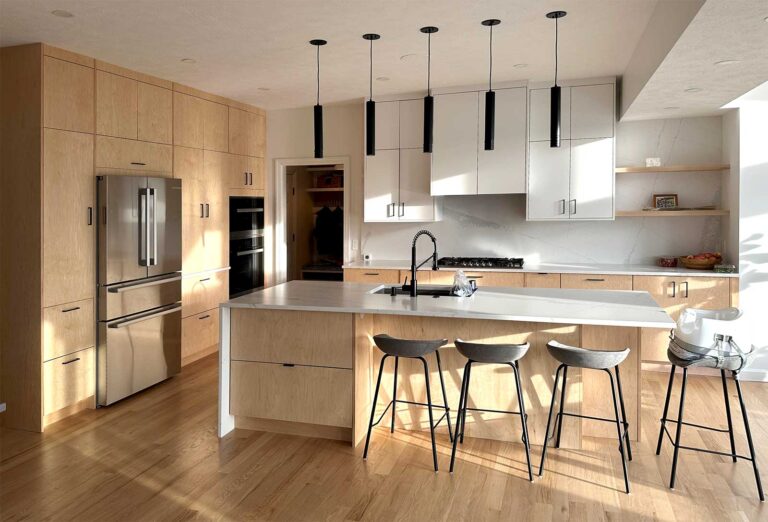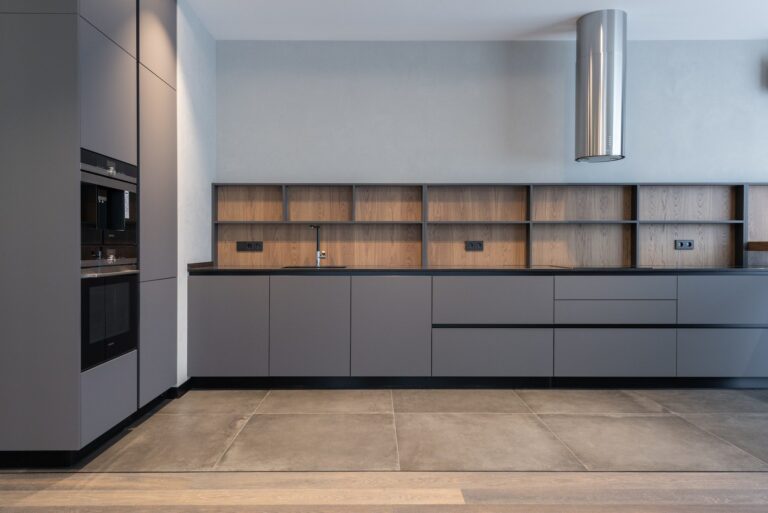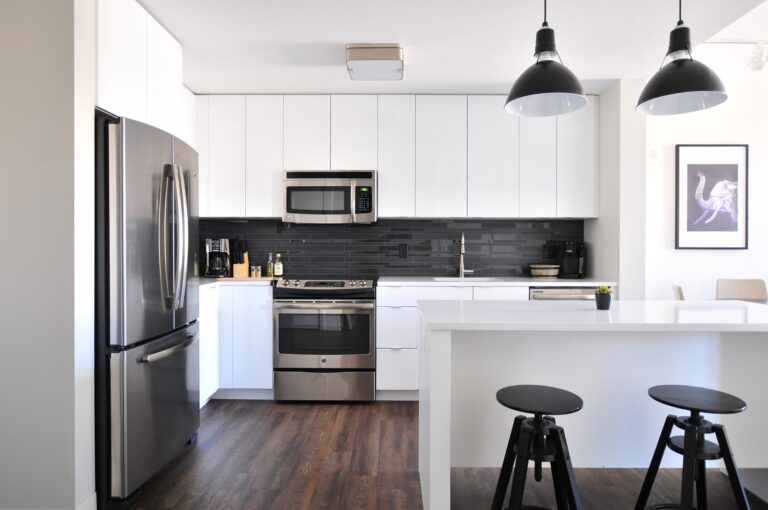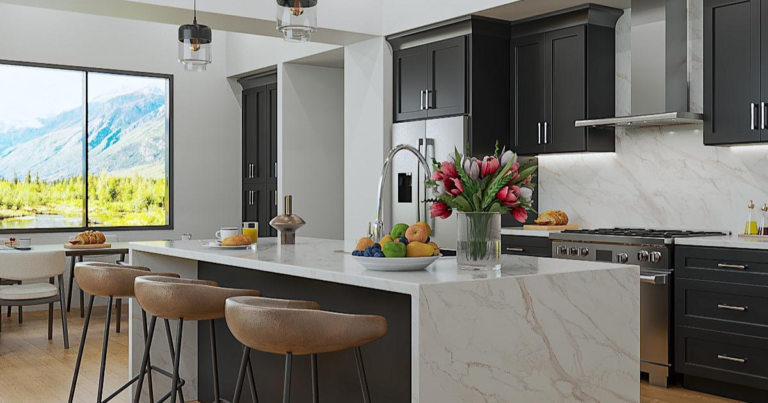

Before installing a pantry cabinet, accurate measurements are the most important step. Pantry cabinets are usually tall, deep and heavy, so even a small measuring mistake can create problems with ceiling clearance, door swing, appliance openings, filler space, leveling and wall fastening.
This guide explains what to measure before installing a pantry cabinet, including ceiling height, wall width, cabinet depth, floor level, wall condition, door swing, appliance clearance, filler space and wall stud location. It is useful for homeowners, contractors, landlords and renovation teams planning RTA pantry cabinet installation in Canadian kitchens.
If you are ready to install the cabinet after measuring, read our full guide on pantry cabinet installation Canada. This article focuses only on the measuring stage before installation starts.
Quick Answer: What Should You Measure Before Installing a Pantry Cabinet?
Before installing a pantry cabinet, measure the ceiling height, available wall width, cabinet depth, floor level, wall straightness, door swing, filler space, appliance clearance, baseboard or trim thickness and wall stud locations. These measurements help confirm that the pantry cabinet can fit, open, level and fasten safely in the kitchen layout.
In This Pantry Cabinet Measuring Guide
1. Measure Ceiling Height Before Choosing a Pantry Cabinet
Ceiling height is one of the first measurements to check before installing a pantry cabinet. Pantry cabinets commonly come in tall sizes such as 84, 90 or 96 inches, so the cabinet must fit the room height and still leave enough space for installation, adjustment and finishing.
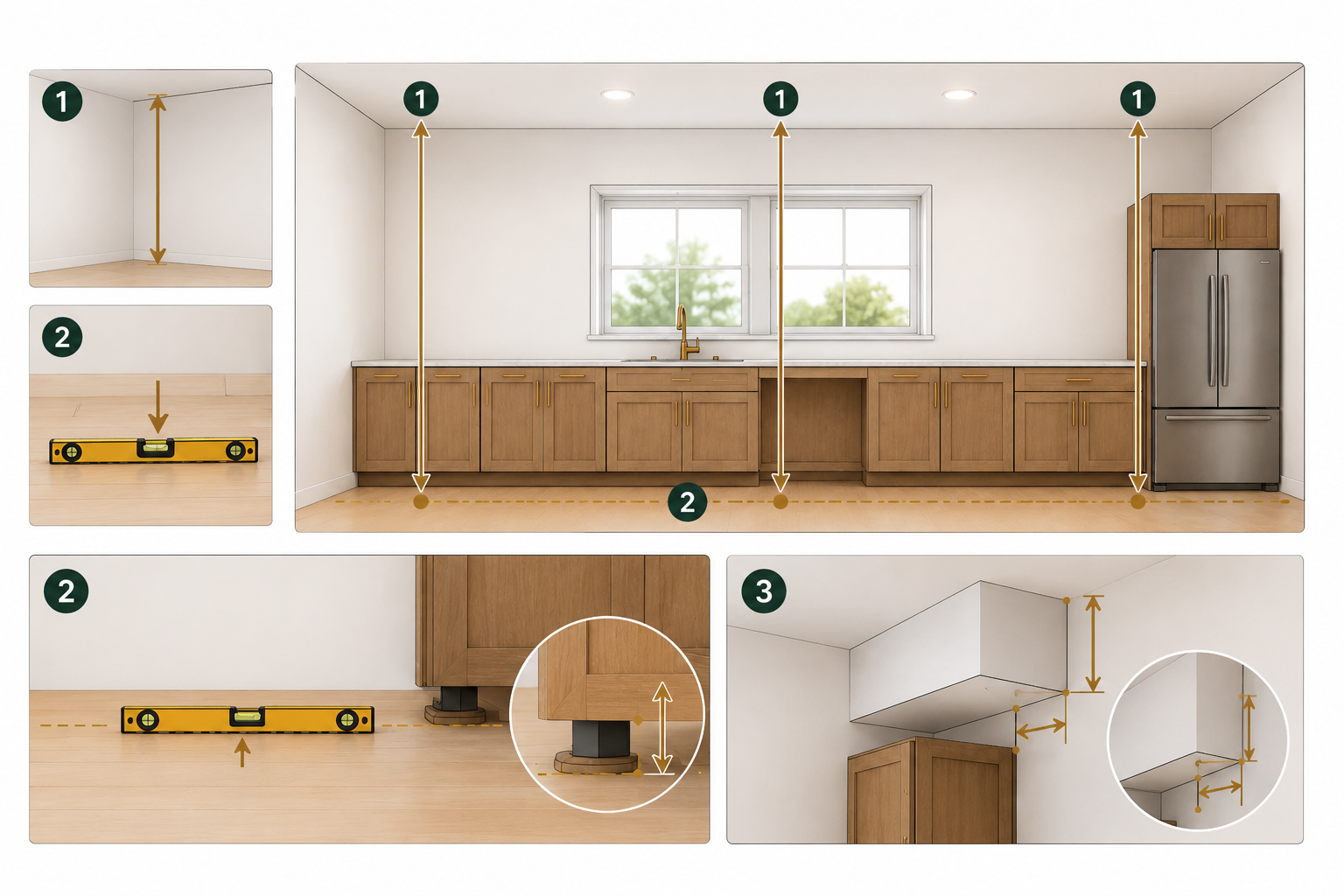
Do not measure the ceiling height in only one spot. Floors and ceilings are not always perfectly level, especially in older homes or renovation projects. Measure the height on the left side, right side and center area where the pantry cabinet will sit.
For common pantry heights and kitchen cabinet dimensions, review our standard kitchen cabinet dimensions guide.
2. Measure Wall Width and Available Layout Space
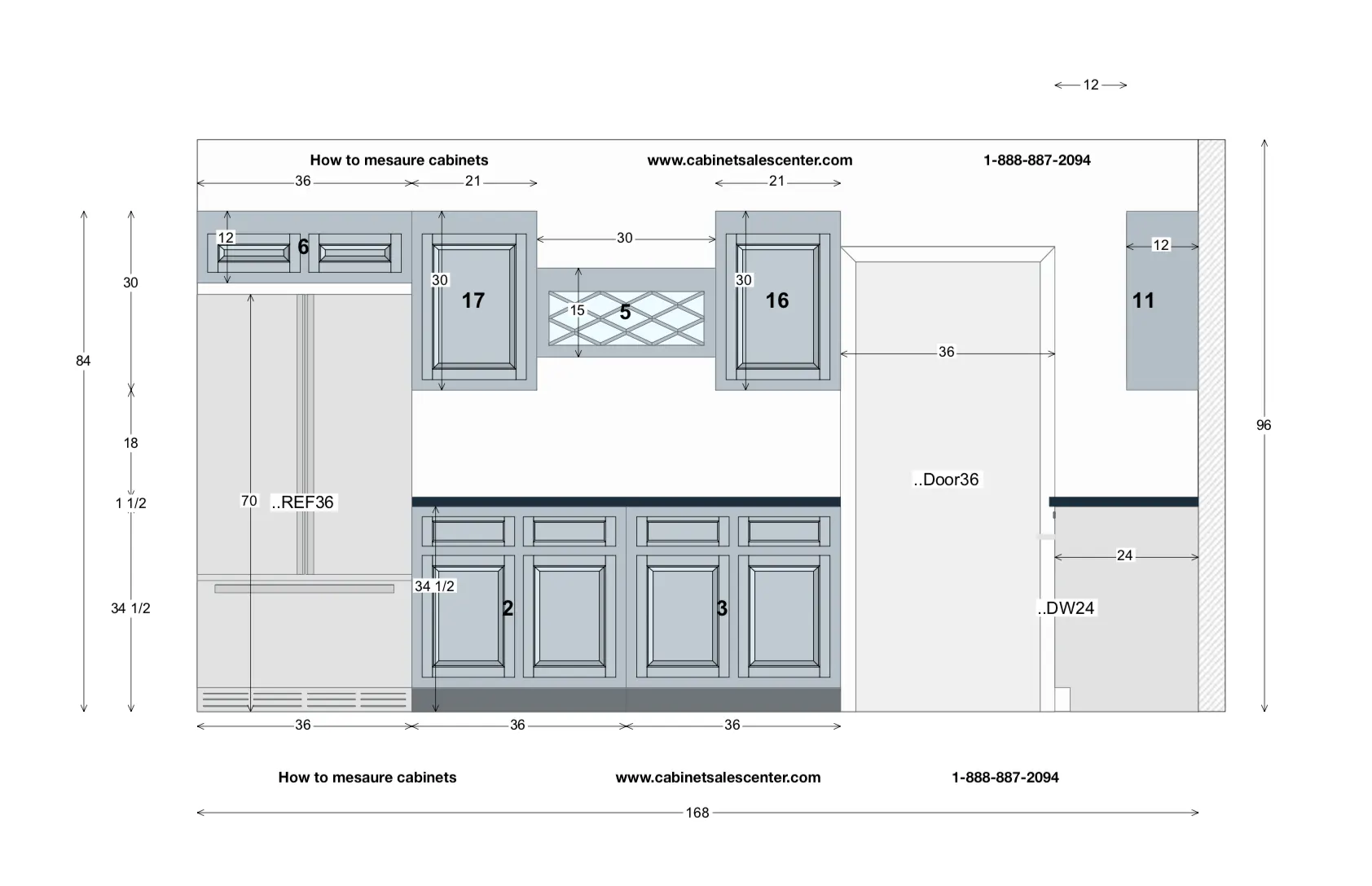
Wall width determines what pantry cabinet size can fit. Measure the full space where the pantry cabinet will sit, then subtract any space needed for fillers, panels, appliance openings or door swing clearance. A pantry cabinet may fit by width, but still fail if there is no room for the door to open properly.
If the pantry cabinet will sit beside a refrigerator, base cabinet run or side wall, the width measurement should include real site conditions. Walls may not be perfectly square, and appliance panels can take up more space than expected.
If you are still deciding where the pantry should go, read our guide on where to place a pantry cabinet in a kitchen layout.
3. Measure Cabinet Depth and Walking Clearance
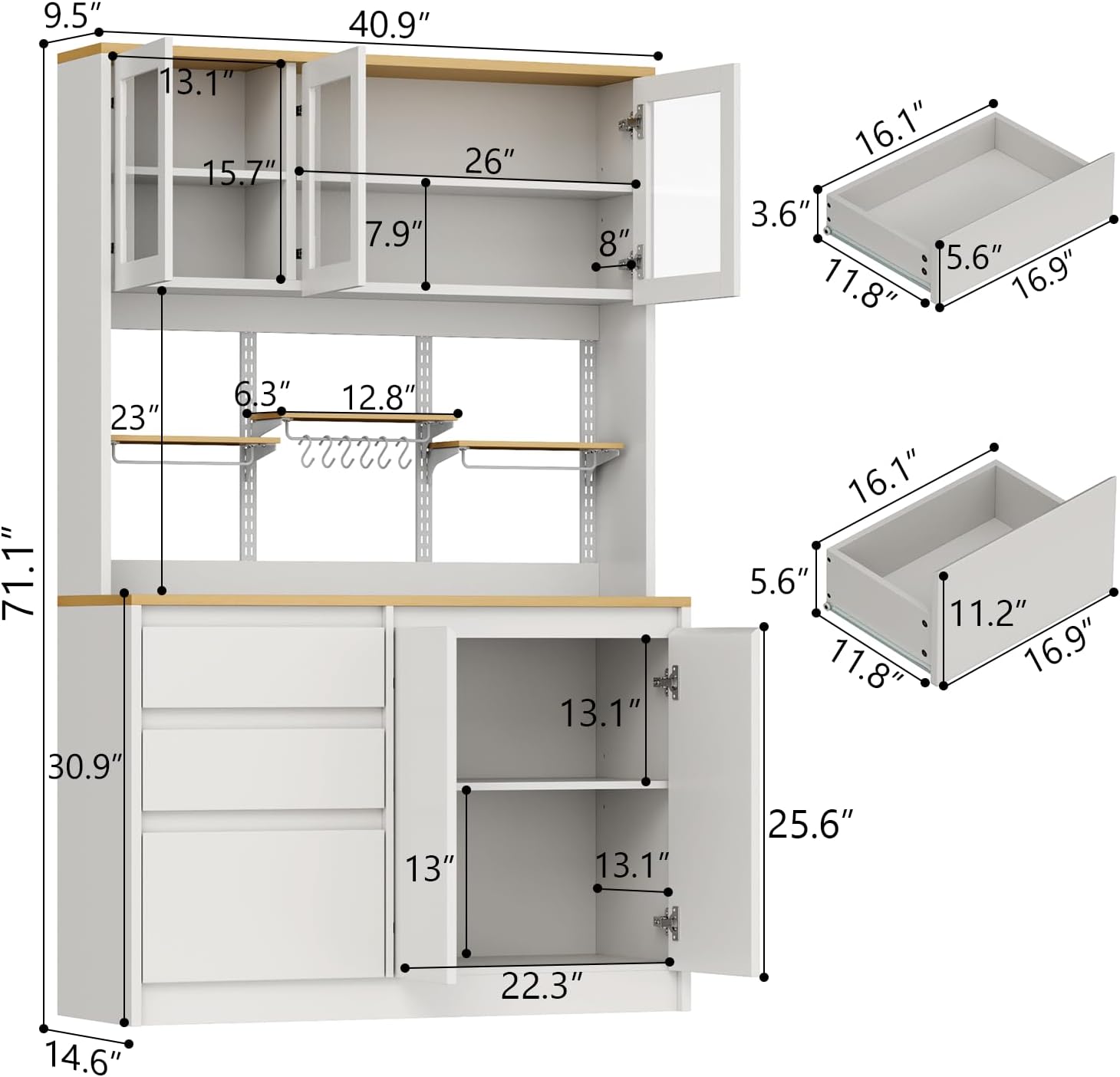
Pantry cabinet depth affects storage, walkway space and alignment with nearby cabinets. A 24-inch deep pantry cabinet often lines up well with base cabinets and refrigerator panels, but it also takes more floor space. In small kitchens, depth and door swing must be checked carefully.
Measure from the back wall to the front of the pantry cabinet location. Then check how much walking space remains when the pantry door opens. If the pantry is across from an island, table, wall or another cabinet run, clearance becomes even more important.
- ✓Cabinet depth: Confirm whether the pantry lines up with base cabinets or tall panels.
- ✓Door opening depth: Check how much space the door needs when open.
- ✓Walkway clearance: Make sure people can still move comfortably when the pantry is in use.
- ✓Island distance: If there is an island, check pantry door swing and aisle space together.
4. Measure Floor Level and Wall Condition
Floor level is very important for pantry cabinets because tall cabinets make small slopes more visible. If the floor is uneven, the pantry may lean, door gaps may look uneven and the cabinet may not line up with nearby panels or cabinets.
Use a level or laser level to check the floor where the pantry will sit. Also check the wall behind the cabinet. A bowed wall or uneven drywall can create gaps behind the cabinet or make wall fastening more difficult.
For more help with this situation, visit our guide on installing cabinets on uneven floors and walls.
5. Measure Appliance Clearance, Filler Space and Door Swing
Pantry cabinets often sit beside refrigerators, walls, tall panels or base cabinet runs. That means appliance clearance, filler space and door swing must be checked before installation. A pantry cabinet can be the right size but still feel wrong if the door cannot open comfortably.
Appliance Clearance
Measure the refrigerator, stove, dishwasher and any nearby appliance doors. If the pantry cabinet sits beside the refrigerator, check both the fridge door swing and pantry door swing together.
Filler Space
Measure space for fillers beside walls, panels and appliances. Fillers help the pantry door open properly and allow installers to adjust for walls that are not perfectly straight.
Door Swing
Open-door space is often forgotten. Before installing the pantry cabinet, confirm that the door will not hit a side wall, handle, island, appliance or another cabinet door.
For placement planning, use our guide on where to place a pantry cabinet in a kitchen layout.
6. Measure Wall Stud Location, Baseboards and Trim
A pantry cabinet should be secured properly after it is leveled. Before installation, locate wall studs behind the cabinet area. Mark the stud locations so the installer knows where to fasten the cabinet safely.
Also measure or check baseboards, floor trim and wall trim. If trim prevents the pantry cabinet from sitting close to the wall, it may need to be removed, cut or planned around before final placement.
- ✓Wall stud location: Helps secure the tall cabinet safely.
- ✓Baseboard thickness: May stop the pantry from sitting tight against the wall.
- ✓Outlet or plumbing position: Check anything behind or beside the cabinet area.
- ✓Finished floor height: Confirm whether flooring is already installed or will be changed later.
For tools used during this process, read our guide on tools needed to install pantry cabinets.
7. Pantry Cabinet Pre-Installation Measuring Checklist
Use this checklist before ordering, assembling or installing a pantry cabinet.
Need Help Measuring for a Pantry Cabinet?
RTA Cabinet Depot can help homeowners, contractors and renovation projects across Canada plan pantry cabinet sizes, layout placement, filler space, door clearance and installation preparation before ordering.
Explore our RTA kitchen cabinets or review the full pantry cabinet installation Canada guide.
Visit: https://www.rtadepot.ca/
8. What to Measure Before Installing a Pantry Cabinet FAQ
What should I measure before installing a pantry cabinet?
Before installing a pantry cabinet, measure ceiling height, wall width, cabinet depth, floor level, wall condition, filler space, door swing, appliance clearance, trim thickness and wall stud locations. These measurements help confirm that the pantry cabinet can fit, open, level and secure properly.
Why is ceiling height important for pantry cabinets?
Ceiling height is important because pantry cabinets are tall. You need enough room for the cabinet height, possible crown molding or trim, and installation movement. If the ceiling is too low or there is a bulkhead, the pantry cabinet may not fit.
Do I need to measure floor level before installing a pantry cabinet?
Yes. Floor level should be checked before installing a pantry cabinet because tall cabinets make small slopes more visible. If the floor is uneven, the cabinet may need shims or adjustable legs before it is secured.
How much filler space does a pantry cabinet need?
The filler space depends on the layout, wall condition and door swing. A pantry cabinet beside a wall, refrigerator or tall panel usually needs filler space so the door and handle can open properly and the installer can adjust for uneven walls.
Should I locate wall studs before pantry cabinet installation?
Yes. Wall studs should be located before installation because a tall pantry cabinet should be secured properly after it is leveled. Marking stud locations in advance helps the installer fasten the cabinet safely.

Sang Vi is a Senior Interior Designer and founder of Wedesign Interior Lab, as well as CEO of the Wedesign Interior Lab, MOC Concepts (Kitchen Cabinets), and Sang Vi Woodworking Manufacturer group. Since 2019, Sang has led an NKBA-certified team specializing in kitchen planning and cabinetry, completing dozens of projects each year across Toronto and other regions in Canada. With deep, hands-on experience in both custom millwork and ready-to-assemble (RTA) kitchen cabinets, Sang focuses on creating designs that are functional, durable, and easy to install. On this RTA platform, Sang shares practical, real-world insights to help homeowners choose, plan, and optimize their kitchen cabinet systems with confidence