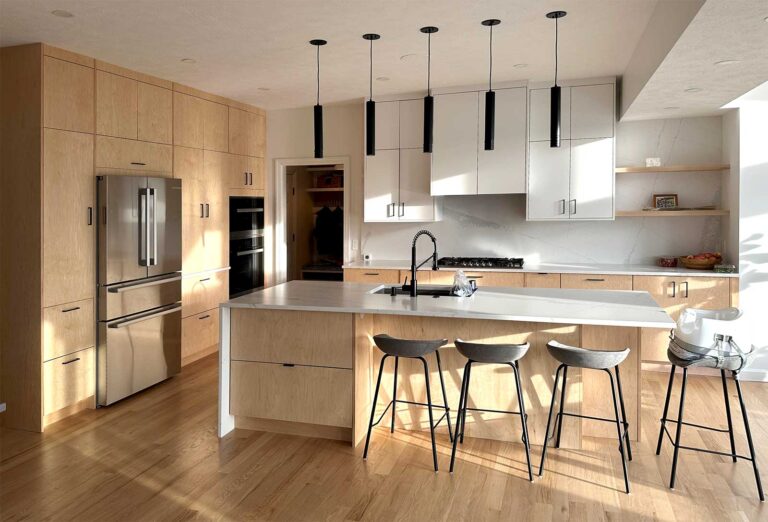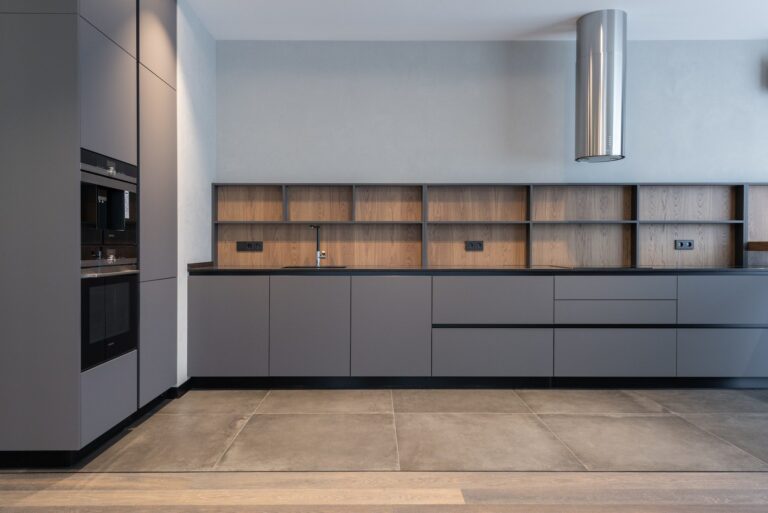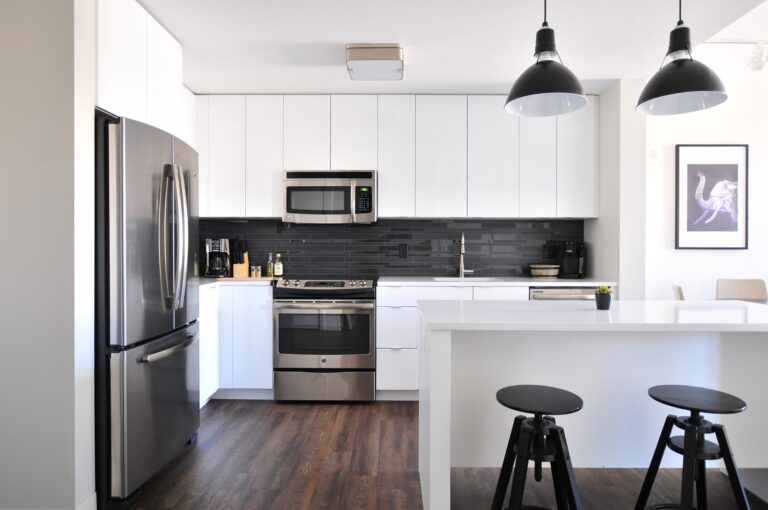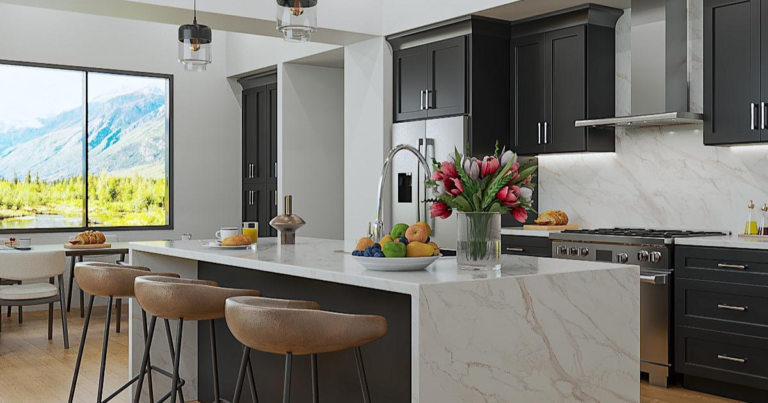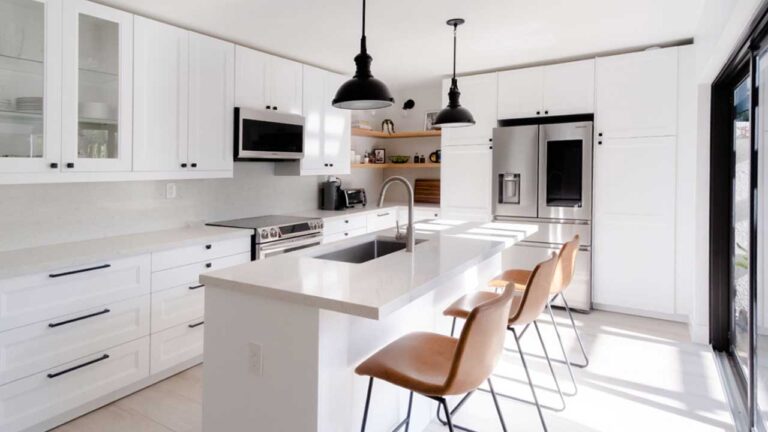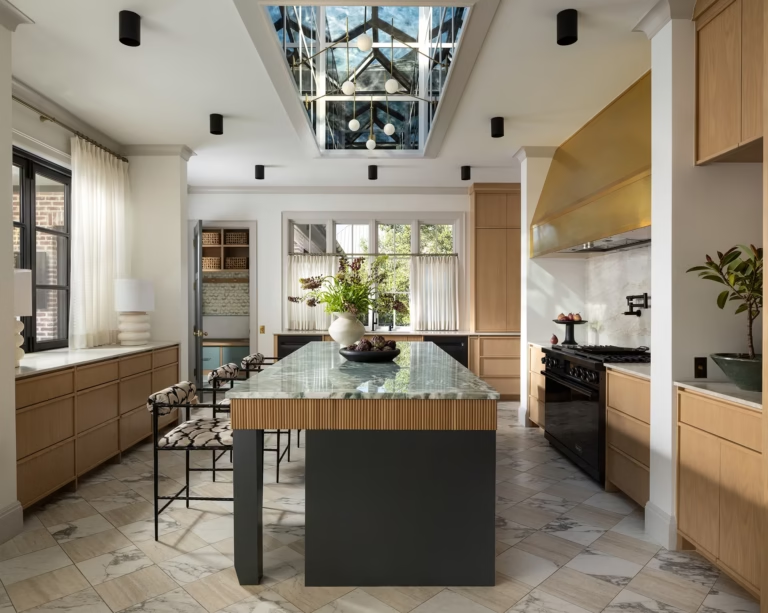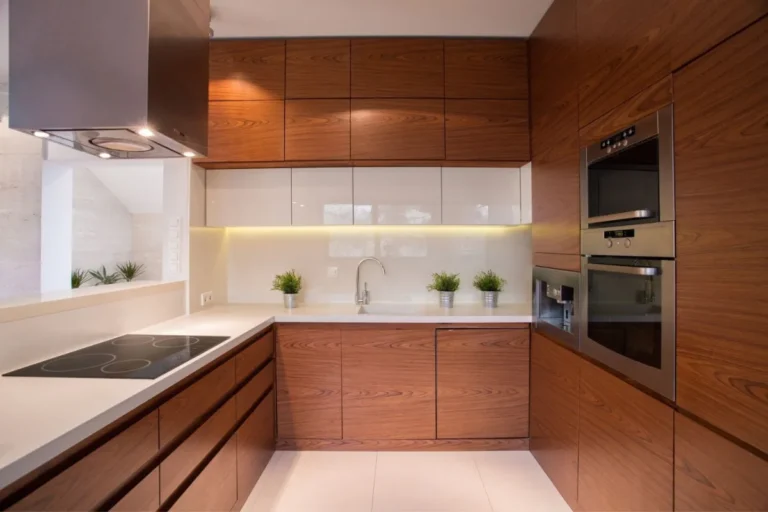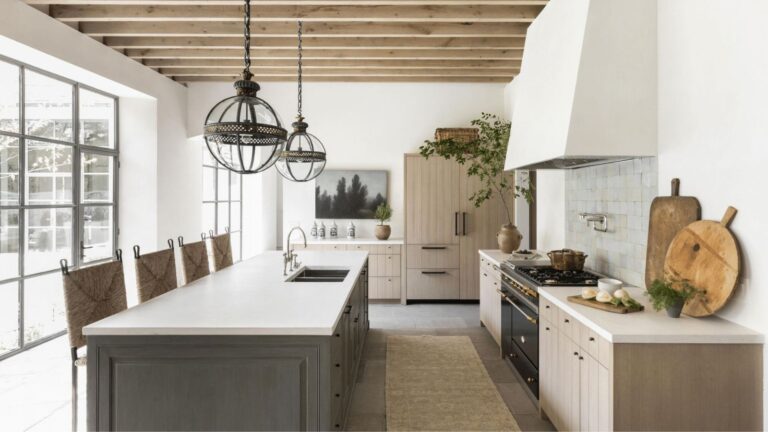

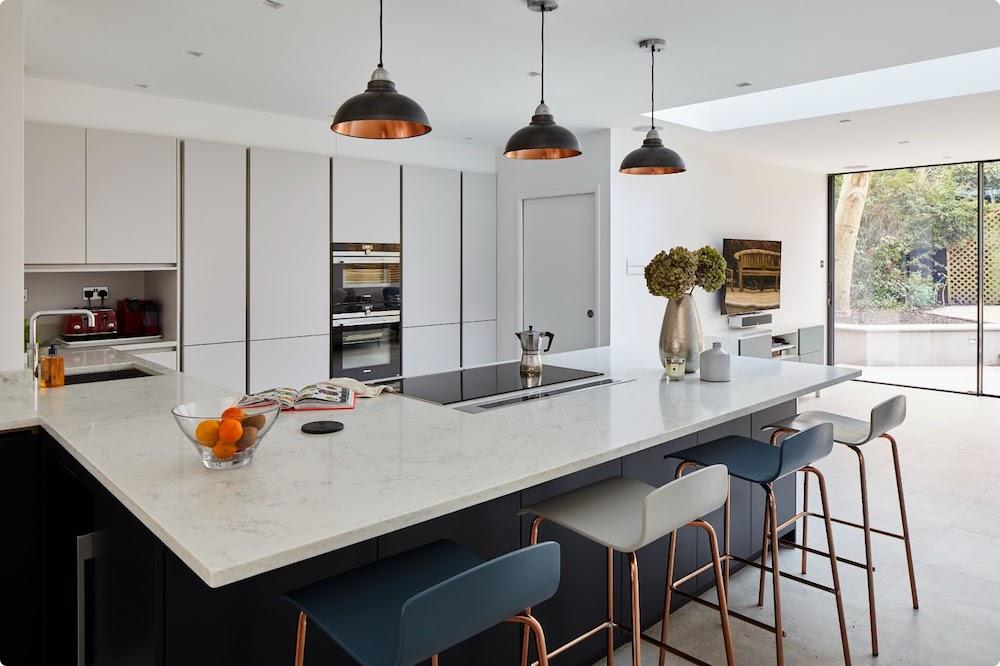
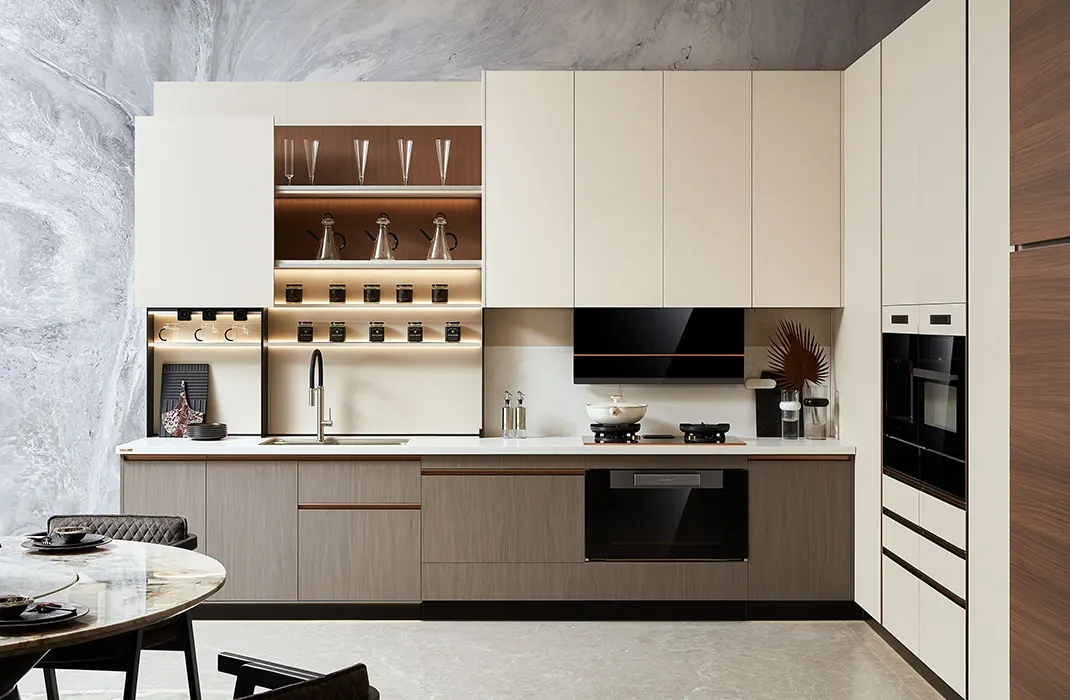
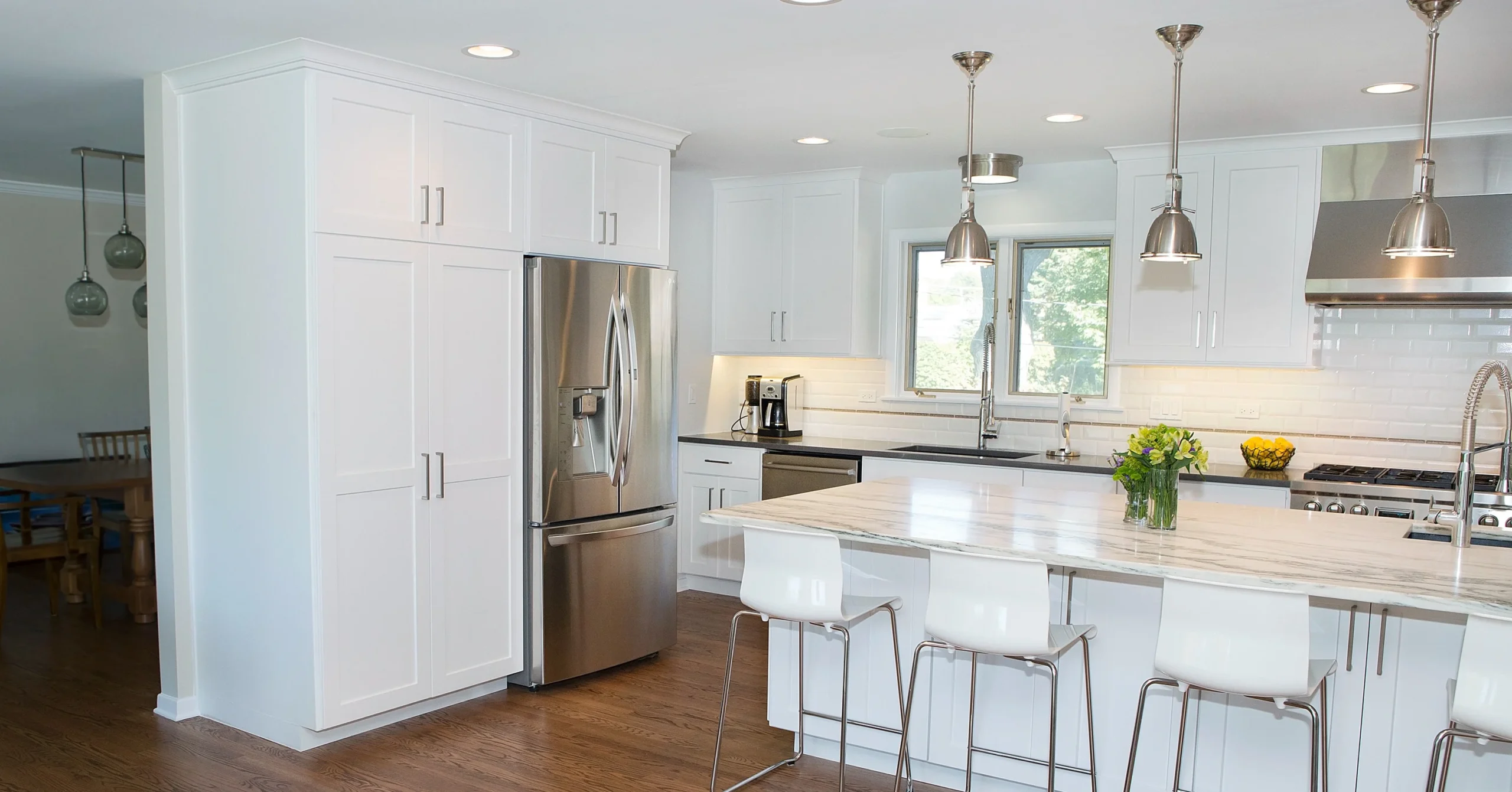
The best pantry cabinet location is usually beside the refrigerator, at the end of a cabinet run or within a planned wall of tall cabinets. The final choice should shorten the route between groceries, food storage and preparation while preserving door swing, appliance access, usable counter space and safe installation support.
This guide is a placement decision tool, not a general kitchen-layout guide. Use it before ordering the pantry cabinet or finalizing fillers and panels. Once the location and size are confirmed, continue with the dedicated pantry cabinet installation guide.
Editorial review: July 2026. Appliance-door projections, required landing space, fillers and cabinet clearances vary by product and project. Confirm the actual cabinet and appliance specifications before approving the layout.
Quick Answer: Where Should a Pantry Cabinet Go?
Place a pantry cabinet beside the refrigerator for one food-storage zone, at the end of a cabinet run to protect countertop space, near the kitchen entrance for grocery access or within a full-height storage wall. Reject any location where the pantry door conflicts with appliances, narrows circulation or cannot be installed and supported correctly.
1. Start With What the Pantry Cabinet Will Store
The contents determine the most useful location. A pantry for everyday ingredients belongs closer to the preparation area than a pantry used for bulk supplies or occasional appliances. A household-access pantry may work near the entrance, while a tall storage wall can suit a larger renovation.
| Primary use | Preferred zone | Key conflict to test |
|---|---|---|
| Dry food and breakfast items | Beside the refrigerator or close to food preparation | Fridge and pantry doors opening together |
| Bulk groceries | Near the kitchen entrance or grocery unloading route | Blocking the main entrance or walkway |
| Small appliances | Near usable counter space | Long carrying path or interrupted landing area |
| Mixed household storage | At the end of a run or on a tall storage wall | Items becoming difficult to reach or organize |
List the items that will be used daily, weekly and occasionally. The best location gives daily items the shortest practical route without moving the tall cabinet into the centre of the work area.
2. What Are the Best Places to Put a Pantry Cabinet?
2.1 Beside the Refrigerator
This is usually the strongest choice for food storage. Refrigerated and dry ingredients stay in one zone, groceries can be put away efficiently and tall elements form a visually consistent group.
Check the refrigerator’s full door and drawer projection—not only the appliance width. Include handles, side panels, manufacturer ventilation requirements and any filler needed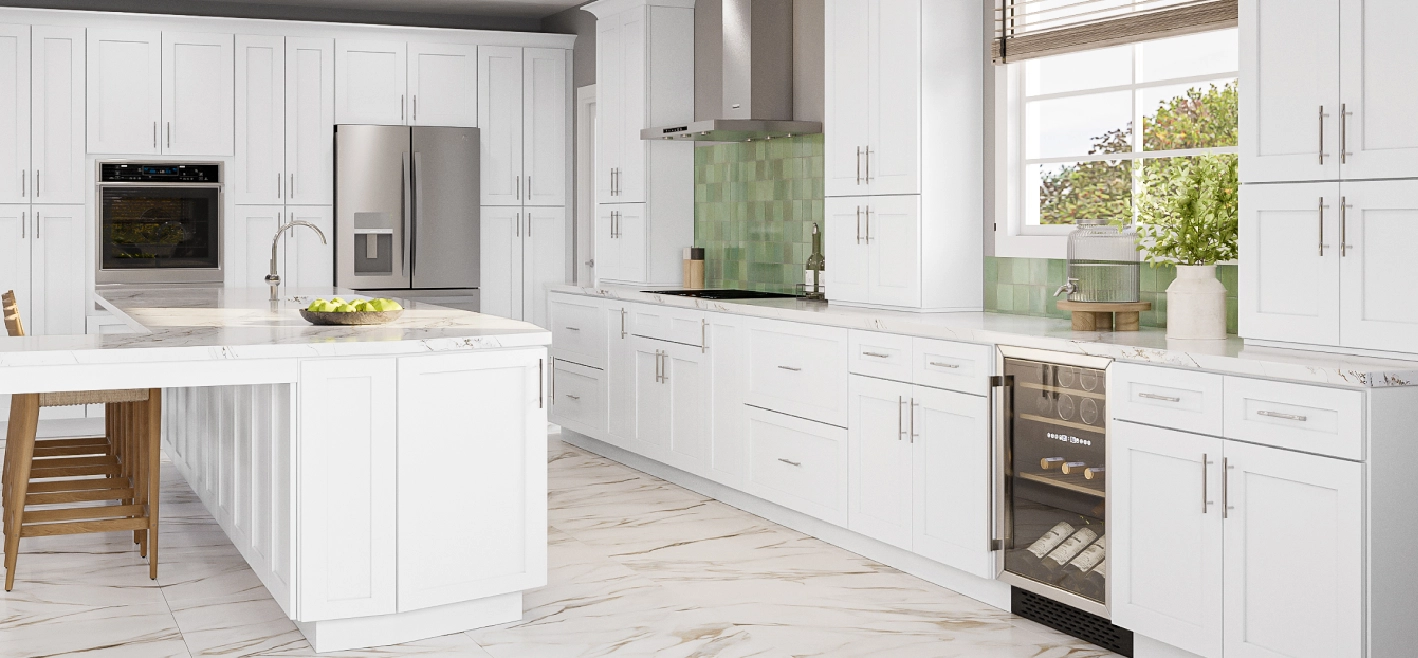
2.2 At the End of a Cabinet Run
An end position keeps a tall cabinet from dividing the main countertop. It creates a clear stopping point for a straight or L-shaped run and usually makes fillers easier to integrate.
Test whether the pantry side faces an open room or a wall. An exposed side may need a finished panel; a wall-side door may require filler space so the door and handle clear the wall or trim.
2.3 Near the Food-Preparation Zone
This location works for frequently used cooking ingredients when it preserves working counter space. The pantry should be close enough to reach without crossing the kitchen, but it should not interrupt the landing area beside a range, oven or sink.
Do not assume that “near the range” means directly beside it. Check the appliance and cabinet specifications, heat exposure, door swing and the location of preparation surfaces.
2.4 Near the Kitchen Entrance
An entrance location can shorten the path for groceries and reduce traffic through the cooking zone. It is useful for snacks, breakfast items and supplies accessed by household members who are not cooking.
Reject this option if an open pantry door narrows the entrance or if the cabinet’s depth creates a blind corner at a circulation route.
2.5 Within a Full Wall of Tall Cabinets
A tall wall works well when the refrigerator, pantry and oven or utility cabinets can be planned as one composition. It concentrates visual height and preserves longer countertop runs elsewhere.
Confirm finished heights, panel thicknesses, appliance openings and filler strategy together. A group of tall units is less forgiving than a single cabinet when the floor, wall or ceiling is uneven.
3. Where Should a Pantry Go in Each Kitchen Layout?
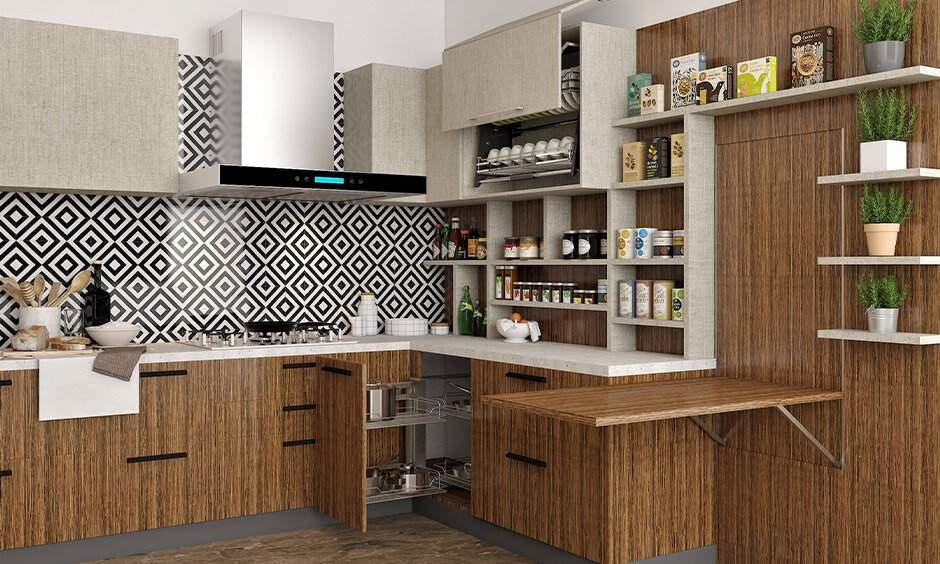
The pantry should sit at the edge of the primary work zone in most layouts. This keeps storage accessible without making a tall cabinet an obstacle between the sink, refrigerator and cooking area.
| Layout | Placement to test first | Main risk |
|---|---|---|
| Single-wall | One end of the run, preferably grouped with the refrigerator | Losing too much continuous counter space |
| L-shaped | Outer end of either run or beside the refrigerator | Crowding the inside corner |
| U-shaped | End of the U or a separate tall-cabinet section | Narrowing the central working area |
| Galley | Near the entrance or at the end beside the refrigerator | Door swing blocking the aisle |
| Open-concept | A composed tall wall or the less visually exposed end of a run | An isolated tall cabinet looking unbalanced |
For the broader strengths and limitations of each configuration, see the guide to L-shaped, U-shaped and galley kitchen layouts.
4. What Should You Measure Before Approving the Location?
Test the location with actual dimensions and moving parts. A pantry can fit the wall width and still fail because a refrigerator drawer, pantry handle, island edge or ceiling condition was not included.
- Pantry envelope: finished width, height and depth including doors and panels.
- Door projection: pantry door, handle and internal pull-out movement.
- Appliance movement: refrigerator doors and drawers, oven door and nearby dishwasher.
- Filler condition: walls, trim and adjacent handles that need separation.
- Circulation: usable aisle with relevant doors open and another person passing.
- Vertical condition: ceiling, bulkhead, crown and room needed to stand or position the cabinet.
- Installation support: wall construction, floor level and access to the cabinet’s approved fastening area.
Use the full guide to what to measure before installing a pantry cabinet. Compare those site measurements with the standard cabinet and pantry dimensions guide; nominal size does not replace the actual product specification.
If the preferred location has an uneven floor or bowed wall, assess it before ordering fillers or finished panels. The specialist guide explains cabinet installation on uneven floors and walls.
5. Where Should You Not Put a Pantry Cabinet?
Do not place a pantry where its height or door movement makes another part of the kitchen harder to use. Reject or redesign these locations:
- ×In the middle of the main counter run: it divides preparation space and creates two short work surfaces.
- ×Against a wall with no door allowance: the door or handle may not open fully.
- ×Inside an appliance conflict: pantry and appliance doors should not trap or block each other.
- ×Across a narrow circulation route: an open door should not close the only path through the kitchen.
- ×Where it removes essential landing space: protect usable counter beside major work areas.
- ×Where the cabinet cannot be supported properly: change the layout or support design before installation.
6. Pantry Cabinet Placement Decision Checklist
A good location should pass every check below. One failed clearance can be more important than several convenience benefits.
- ✓The pantry contents are close to the people or task that use them most.
- ✓The tall cabinet does not split essential preparation counter space.
- ✓Pantry, appliance and adjacent cabinet doors can operate independently.
- ✓People can pass through the kitchen during normal pantry use.
- ✓Required fillers, panels and finished sides are included in the layout.
- ✓The cabinet can be moved into position, leveled and supported correctly.
- ✓The location still works with the actual ordered appliance and cabinet specifications.
Need Help Testing the Pantry Location?
RTA Cabinet Depot can help check pantry size, fillers, appliance clearance and the complete kitchen layout before ordering.
Call +1 888 973 5636 or explore RTA kitchen cabinets.
7. Pantry Cabinet Placement FAQ
Should a pantry cabinet go beside the refrigerator?
Often, yes. It creates one food-storage zone and groups tall elements together. Test the full refrigerator and pantry door movements, handle projections, side panels, ventilation requirements and filler space before approving the location.
Can a pantry cabinet go at the end of a cabinet run?
Yes. An end position usually preserves continuous countertop space and gives the cabinet run a clear stopping point. Include a finished side panel when exposed and enough filler when the pantry is beside a wall.
Where should a pantry go in a small kitchen?
Test a narrow pantry at the end of the run, beside the refrigerator or near the entrance. The best option adds vertical storage without narrowing the only aisle, blocking an appliance or removing essential preparation counter space.
Can a pantry cabinet go next to a range or oven?
Only when the cabinet and appliance specifications permit the arrangement and the pantry does not remove necessary landing space. Check heat, door movement, panels and clearances using the actual products rather than a generic layout assumption.
How do I choose between two possible pantry locations?
Compare the complete door and appliance movements first, then circulation, counter continuity and distance to the pantry’s main users. Reject any option with a physical conflict; among the remaining choices, select the location that shortens everyday access and integrates the tall cabinet visually.

Sang Vi is a Senior Interior Designer and founder of Wedesign Interior Lab, as well as CEO of the Wedesign Interior Lab, MOC Concepts (Kitchen Cabinets), and Sang Vi Woodworking Manufacturer group. Since 2019, Sang has led an NKBA-certified team specializing in kitchen planning and cabinetry, completing dozens of projects each year across Toronto and other regions in Canada. With deep, hands-on experience in both custom millwork and ready-to-assemble (RTA) kitchen cabinets, Sang focuses on creating designs that are functional, durable, and easy to install. On this RTA platform, Sang shares practical, real-world insights to help homeowners choose, plan, and optimize their kitchen cabinet systems with confidence.